5 Mistakes When Buying Expensive Clothing (And How to Avoid Them)
Miron BradicMost people think spending more money means buying better clothes. It doesn't. Here's what actually separates a smart luxury purchase from an expensive mistake.
You've been disappointed by expensive clothing before. Most people have. The blazer that wrinkled after two wears. The cashmere that pilled within a season. The silk blouse that felt stiff instead of fluid. The coat you paid €800 for that somehow looks cheap.
The problem usually isn't the price. It's the decision behind the purchase.
Luxury fashion has a serious credibility problem. Brands charge extraordinary prices for garments that don't deserve them. Marketing fills the gap where quality should be. And buyers keep trusting price tags as quality signals, which is exactly what the industry depends on.
These are the five mistakes that cause most luxury disappointments, and what to do instead.
Mistake 1: Paying for the Brand, Not the Garment
Brand names are not quality guarantees. They used to be closer to one, but that relationship has eroded significantly over the past two decades.
Many of the most recognizable luxury houses have quietly moved production to lower-cost facilities while keeping prices the same or raising them. The brand remains intact. The craftsmanship often doesn't. You're paying for the heritage of what the brand once was, not necessarily what the garment currently is.
Meanwhile, smaller European ateliers and made-to-order brands produce work of genuinely exceptional quality. No famous name, no global marketing budget, no flagship store on Via Condotti. Just excellent fabric, proper construction, and honest pricing.
A logo is not a quality indicator. It's a marketing tool. The two things are not the same.
The practical approach: when you pick up a garment, remove the label mentally. Evaluate what you're holding. How does the fabric feel? Is there weight and substance to it? Look at the seam finishing inside. Check how the hem is done. Turn it over and examine the construction, not the tag.

Genuine quality announces itself through material and workmanship. It doesn't need a name to justify it. If the garment can only be defended by pointing at the brand, that's the problem.
Mistake 2: Ignoring Fabric Composition
The label inside a garment tells you more about its quality than the label on the outside. Most people never look at it.
Fabric composition determines everything: how the garment feels, how it moves, how it ages, how long it lasts. The difference between 100% mulberry silk and a silk blend isn't just a matter of quality degree. It's a fundamentally different product that happens to be sold in similar packaging.
A few things worth knowing before you buy:
Cashmere quality varies dramatically within cashmere itself. The key specifications are fiber length (premium cashmere uses fibers of 36mm or longer) and fiber diameter measured in microns (15 to 15.5 microns or finer is premium; above 19 microns starts to feel coarser and pills faster). A label that says "100% cashmere" covers an enormous quality range. The price doesn't always tell you where in that range you are. Ask the brand for specifications directly. Quality brands know them and share them without hesitation. If they can't or won't tell you, that says something.
Silk weight matters more than most people realize. Silk is measured in momme (mm). Lightweight silk at 8mm to 12mm looks beautiful initially but shows wear quickly. Garments intended to last decades are typically made from 16mm to 25mm silk. The heavier the silk, the better the drape, the durability, and the way it feels against skin.

Polyester in "luxury" blends is a cost reduction, not a feature. It changes how the fabric breathes, how it ages, and how it feels over time. Natural fibers properly cared for consistently outperform synthetic blends across years of wear. When a brand lists four different fibers on the composition label, ask why each one is there.
Wool weight is measured in GSM (grams per square meter). A quality wool coat should be 300 to 400gsm. Anything significantly lighter will lose structure and show wear quickly. Pick up the garment and assess whether it has genuine substance, not whether it's impressively light.
The simplest test: touch the fabric and ask whether it feels noticeably better than things you already own. If it doesn't, there's no quality justification for paying significantly more.
Mistake 3: Buying Trends Instead of Timeless
This one is obvious in theory. Everyone agrees with the principle of building a timeless wardrobe. And then the season's defining coat appears, it's genuinely beautiful, you buy it, and two years later it looks exactly like two years ago.
The problem is that trend pieces and timeless pieces often look identical at the moment of purchase. The difference only becomes visible later, once the cultural moment they were tied to has passed.
A silhouette designed around a specific fashion season looks dated when that season ends. A garment designed to be elegant keeps looking elegant. The difference is intention, not aesthetics. And you can't always read intention from looking at something in a store.
The question isn't whether it looks good now. The question is whether it will still look right in ten years.
The practical test: would this garment have looked appropriate ten years ago? Will it look appropriate ten years from now? If the honest answer to either question is no, you're buying a trend dressed in quality clothing, not a timeless piece.

This doesn't mean avoiding anything new. It means distinguishing between genuine timelessness and the appearance of it. A well-cut trouser in quality wool will always be right. The same trouser with an exaggerated proportion because that silhouette is having a moment will date.
Quiet luxury collections change slowly. They refine rather than reinvent. If a brand's offering looks completely different every season, it's trend-driven by definition, regardless of the price point or the neutral color palette.
Mistake 4: Accepting a Poor Fit
Fit is the most important element of how a garment looks. It's also the element most consistently compromised in ready-to-wear purchasing. And it's the mistake almost nobody talks about, because the industry depends on people not thinking too carefully about it.
Standard sizing exists because mass production requires it. A brand produces one size 38. Every woman who wears that size has different shoulder width, torso length, arm length, and proportions. The garment fits some of them well. It fits most of them approximately. Approximately is not the same as well.
This matters more at the luxury level than anywhere else. Exceptional fabric and proper construction are both undermined by a shoulder seam that sits slightly off or a waist that falls at the wrong point. The garment looks expensive. It doesn't look made for you. Because it wasn't.
There are three realistic paths forward:
Alterations after purchase. A skilled tailor can take a well-made garment and adjust it to your specific measurements. This is consistently underused. Not every alteration is possible, and some garments accommodate it better than others, but for many pieces this is the most practical path to proper fit.
Made-to-measure. The garment is cut to your measurements from the beginning. There is no alteration step because the fit was never compromised. This is how the best clothing has always been made, and it's the only approach that guarantees fit for every body, every time.
Extremely refined ready-to-wear sizing. Some brands offer the same cut across a wider proportional range rather than just scaling up standard blocks. This gets closer than standard S/M/L without requiring bespoke construction.
The mistake is accepting "this is close enough" at luxury prices. In fast fashion, approximate fit is expected. In a garment you're paying several hundred euros for and intending to wear for a decade, close enough is the wrong standard entirely.
Mistake 5: Overbuying Instead of Investing
The wardrobe full of expensive things you rarely wear is one of the most common outcomes of luxury shopping, and one of the most wasteful.
It happens because purchases are made one at a time, each one justified in isolation. This coat is beautiful. This blouse is perfect for that event. These trousers will work with everything. Each individual decision seems right. The accumulation of them doesn't produce a coherent wardrobe.
Ten exceptional pieces you wear constantly serve you better than fifty adequate pieces you cycle through.
The investment approach starts differently. Not with what's available, but with what's genuinely missing. What do you reach for constantly and never have in exactly the right version? What would you wear twice a week for the next five years if you owned it?
Those are the pieces worth spending seriously on. Not because they're the most glamorous purchases, but because the cost-per-wear mathematics over time makes them the most economical ones.
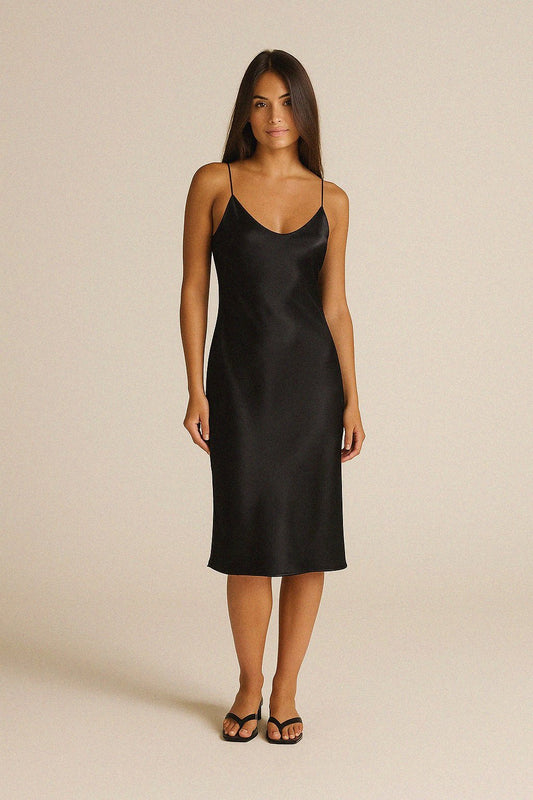
A well-made wool coat, properly cared for, lasts fifteen to twenty years. A quality cashmere piece lasts a decade. A bias-cut silk dress, washed correctly and stored well, can be worn for decades. Divide the purchase price by years of consistent use and the cost becomes remarkably low.
A mediocre coat replaced every two years costs you the same total amount and never gives you the experience of owning something excellent.
The discipline required is real: pass on pieces that are good but not great. If the fit isn't exactly right, if the fabric doesn't feel genuinely different, if you won't reach for it constantly, pass. Not because there's anything wrong with the piece. Because "good enough" accumulates into a wardrobe that never quite works.
The Common Thread
All five of these mistakes come from the same place: passive decision-making. Trusting that a price, a brand name, or a trend removes the need to evaluate what you're actually buying.
It doesn't. No price point, brand name, or current aesthetic makes the evaluation unnecessary. The questions are always the same. Is the fabric genuinely good? Is the fit right? Is this timeless or tied to a moment? Am I buying this because I'll wear it constantly, or because I want it right now?
The women who build genuinely excellent wardrobes ask these questions every time. They know fabric. They understand construction. They've stopped chasing trends in favor of personal standards. They buy slowly and deliberately, and they wear what they buy constantly.
That's quiet luxury in practice. Not a price point or an aesthetic. A way of making decisions about what's worth owning.
Bradic is a made-to-measure Croatian womenswear brand. Every piece is crafted after purchase, to your measurements, using materials we can account for.