The Making of the Asymmetrical Cashmere Top (Piece Born From Sculpture, Not Fashion)
Miron BradicThis piece didn't start with a trend forecast or a mood board. It started with a question: what if a garment could reshape the body the way a sculptor shapes clay?
The inspiration came from architecture, clean lines that create tension, volumes that shift perspective, asymmetry that draws the eye not because it's loud, but because it's balanced in an unexpected way.
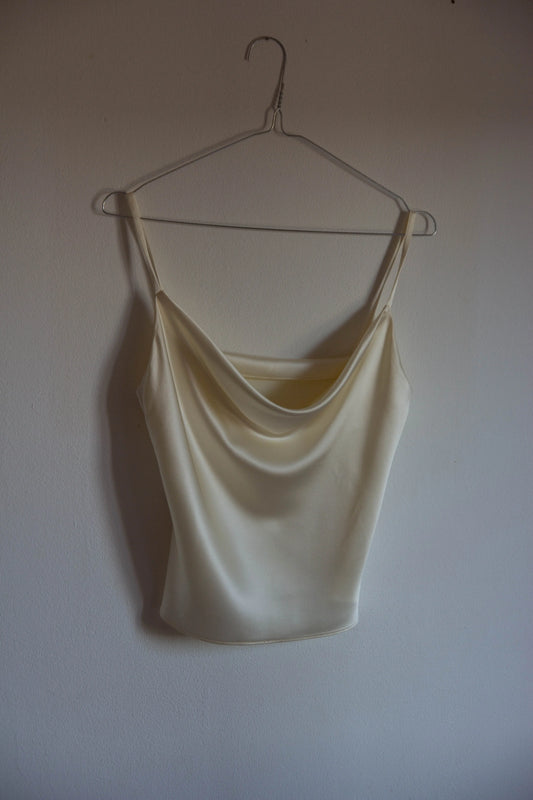
This isn't a top designed to follow fashion. It's designed to sculpt the silhouette, to create a form that exists somewhere between garment and artwork. Quiet, but impossible to ignore.
From Vision to Sketch
Every piece begins with a drawing, the first sketches were done by hand.
The challenge with asymmetry is that it lives on a knife's edge. Too subtle, and it's forgettable. Too extreme, and it becomes costume.
We defined three non-negotiable elements:
- One shoulder exposed: Creating a diagonal line that elongates the neck and opens the upper body
- Wide volume that flows across the torso: Not tight, not loose
- Precise draping: The garment itself is the design, it needs nothing else
These sketches took few tries. Proportion is everything in asymmetry. A few centimeters in the wrong direction, and the entire piece loses its balance.
Translating a Drawing Into a Pattern
This is where most asymmetrical designs fail.
A sketch is two-dimensional. A body is not.
Pattern-making for this piece is the most technically demanding part of the entire process. It is not just creating a garment, it's engineering a three-dimensional form that must sit perfectly on a moving, breathing body.
Symmetrical designs are forgiving. If one side is slightly off, the other side balances it out. Asymmetrical designs have no such luxury.
Every measurement must be precise. A seam placed a bit too high, a curve that's slightly too aggressive, and the entire piece collapses visually. It won't sit right on the shoulder. The volume won't fall correctly. The asymmetry will look accidental instead of intentional.
Pattern-making for asymmetry is geometry, physics, and art combined.

Measurements: Crafting for a Real Body
Before we could cut a single piece of fabric, we needed measurements.
Not standard sizing. Actual measurements.
We selected a model form to develop the piece around, measuring the torso, shoulder width, arm length, and the distance from shoulder to hip. But because this piece is asymmetrical, we also had to measure:
- How far the exposed shoulder naturally sits from the neck
- The exact angle at which the fabric would cross the body
- The depth needed for the volume to drape without pulling or bunching
Asymmetry doesn't forgive. A symmetrical top can be slightly loose or slightly snug and still work. An asymmetrical piece must fit exactly as designed, or the entire sculptural effect is lost.
The process looks messy, measurements written everywhere, fabric draped over a form, constant adjustments. But the precision behind it is absolute.

Creating the Prototype
The first version of this top was not made in cashmere.
It was made in wool.
This is standard in garment development, especially for complex pieces. Wool behaves similarly to cashmere, it has weight, structure, and drape, but it's far more economical for testing and iteration.
The prototype allowed us to:
- Test how the piece sits on the body
- Evaluate movement
- Refine the balance
We made adjustments. Small ones, a seam moved half a centimeter, a curve softened slightly, the neckline deepened by a fraction. In asymmetrical design, these small changes are the difference between a piece that looks intentional and one that looks like a mistake.
The wool prototype went through three iterations before we were satisfied.
It's not glamorous. It's technical, methodical work. But it's the foundation of everything.

The Final Fabric: Cashmere With Structure
Once the pattern was perfected in wool, we moved to the final material: cashmere.
Not just any cashmere, grade A fiber chosen specifically for its ability to hold structure while maintaining softness. This piece requires both: the cashmere must be soft enough to drape beautifully, but firm enough to maintain the sculptural volume without collapsing.
The wool prototype had similar behavior. The cashmere brings it to life.
The fullness in the final piece, the way the fabric falls across the body with weight and intention, that's cashmere doing what only cashmere can do. It has a presence that wool can't quite replicate.
Every final piece is cut and constructed in this cashmere. It's the material that transforms the design from prototype to finished garment.
Some pieces are made to be worn. Others are made to sculpt the body. This one does both.