Olive Wool Vest: Construction Process
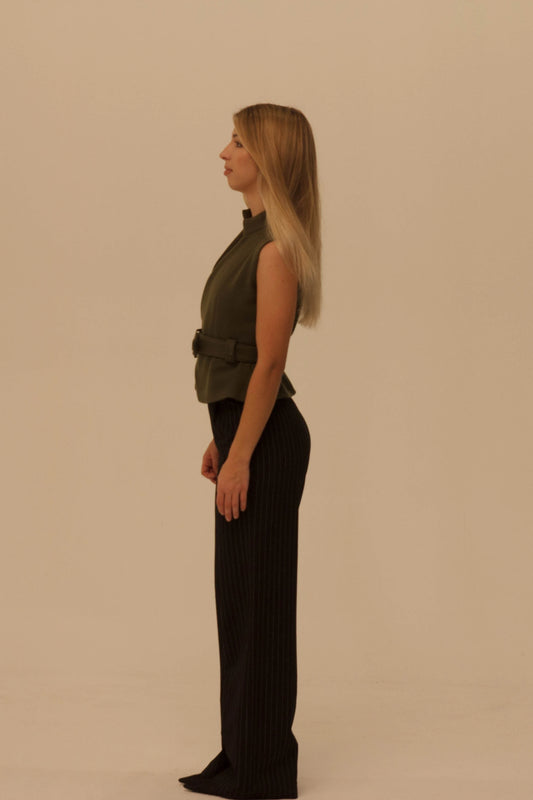
Miron BradicSome garments are meant to disappear into the background. This vest is meant to structure everything around it.
400gsm olive wool. Burgundy silk lining. Asymmetric front overlap. Clean architectural lines.
Here's how it comes together.
The Materials
Outer fabric: 100% wool, 400gsm, olive
Lining: 100% mulberry silk, burgundy
Why 400gsm Wool
This isn't lightweight suiting wool. 400gsm has substance.
What this weight provides:
• Structure that holds shape without collapsing
• Volume that creates silhouette (not just covering the body)
• Fabric memory (returns to its intended form after wear)
• Visual weight that grounds an outfit

The challenge: Heavy wool doesn't forgive construction errors. Every seam must be precise. Every press must be controlled. The fabric shows mistakes.
Why Burgundy Lining
The exterior is restrained. The interior can be expressive.
Burgundy silk lining creates contrast you only see when putting the vest on or taking it off. Private luxury.
It also serves function: silk glides smoothly over other fabrics. The vest layers effortlessly over shirts, sweaters, or dresses without catching or bunching.

Pattern Construction: Architectural Lines
The pattern dictates everything.
The Silhouette
Key elements:
• Structured shoulders (frame the body)
• Defined waist (creates shape)
• Flared lower section (movement and balance)
• Asymmetric front overlap (visual interest without decoration)
Balance Is Critical
With asymmetry, balance becomes even more important.
The pattern must ensure:
• Left and right sides balance visually despite being different
• The overlap sits flat without pulling or gaping
• Weight distribution doesn't cause the vest to twist on the body
• Shoulders remain level despite asymmetric front

This takes multiple adjustments. Too much overlap, and it looks costume-like. Too little, and the asymmetry is barely noticeable. The line had to be clean and intentional.
Cutting: Respecting the Grain
Heavy wool demands precision in cutting.
Why Grain Direction Matters More at 400gsm
Lighter fabrics are forgiving. If grain is slightly off, they still drape reasonably well.
400gsm wool is not forgiving:
• Off-grain pieces will twist permanently
• The weight amplifies any misalignment
• Fabric memory locks in the error
Each pattern piece is laid out carefully:
• Grain lines aligned exactly with the fabric weave
• Pattern pieces arranged to minimize waste while respecting grain
• Wool nap checked (texture must run in the same direction on all pieces)

Cut by hand, piece by piece. No stacked layers. No approximation.
Building the Structure: Internal Support
A structured vest requires more than just outer fabric.
Interfacing the Front and Collar
Strategic reinforcement:
• Front overlap areas are interfaced (maintains clean lines without bulk)
• Collar is interfaced and shaped (creates crisp edge that frames the face)
• Shoulder area receives subtle support (structure without stiffness)
The goal: Structure that's felt, not seen. The vest should hold its shape but remain comfortable and natural to wear.

Shaping With Steam
As each section is interfaced, it's pressed over a tailor's ham.
This curved pressing surface allows:
• Shaping flat fabric into curves that fit the body
• Setting the wool fibers into their intended form
• Creating 3D structure from 2D pattern pieces
The neckline and shoulders are particularly critical. They must curve smoothly to sit properly on the body. Pressing over the ham creates this curve permanently.
Sewing and Pressing: Building Layer by Layer
Construction happens in sequence, with pressing between every major step.
The Sequence
1. Darts and shaping seams First, any darts or internal shaping seams are sewn and pressed. These create the waist definition and flared lower section.
2. Front pieces to back at shoulders Shoulder seams are sewn and pressed open. This must be perfectly flat—any bulk here is visible and uncomfortable.
3. Side seams Sewn and pressed. These create the silhouette from underarm to hem.
4. Asymmetric front overlap The overlap is constructed, pressed, and secured. This is the most visible design element—it must lie completely flat.
5. Collar/neckline finishing The collar is attached, pressed, and shaped. The edge is rolled slightly to the inside so the seam isn't visible from the outside.

Why Pressing Can't Be Skipped
Heavy wool requires controlled heat:
• Too hot, and you risk scorching or creating shine
• Too cool, and the seams don't set properly
• Correct temperature with adequate steam sets the fibers permanently
Between each construction step, the piece is pressed:
• Seams are opened and flattened
• Curves are shaped over the ham
• Edges are crisped and defined
This isn't just aesthetic. Unpressed seams in 400gsm wool create bulk that's impossible to eliminate later. Each seam must be flat before the next step begins.
Attaching the Burgundy Lining
The lining is constructed separately, then attached.
Why Separate Construction
The lining has its own structure:
• Darts and seams that mirror the outer fabric
• Slightly smaller measurements (so it sits inside smoothly without pulling)
• Clean finished edges
It's sewn together completely, then attached to the vest body at the neckline and armholes.

The Attachment Process
Where lining meets outer fabric:
• Neckline: Lining is sewn to the facing, then turned to the inside and pressed
• Armholes: Same process, sewn, turned, pressed
• Side seams: The lining is secured at the side seams but allowed slight ease for movement
• Hem: The lining is finished separately and attached with a floating hem (not sewn tightly, allowing both layers to move independently)
The result: When you put the vest on, you see that flash of burgundy silk. The interior is as refined as the exterior.
Why This Matters
A well-attached lining:
• Doesn't pull or create tension on the outer fabric
• Moves with you without bunching
• Hides all construction details
• Creates a luxurious wearing experience
A poorly attached lining:
• Creates drag on the outer fabric (causes distortion)
• Bunches at the armholes or shoulders
• Makes the vest uncomfortable to wear
• Ruins the exterior silhouette
The lining in this vest is constructed with the same precision as the outer layer. It's not an afterthought, it's integral to how the piece functions.
Final Shaping: Bringing It Together
After construction is complete, the vest receives final shaping.
Steam and Form
The vest is placed on a dress form and thoroughly steamed:
• All seams are checked and re-pressed if needed
• The overall silhouette is evaluated
• The asymmetric overlap is verified for balance
• The collar and neckline are shaped one final time
Then it's left to cool completely on the form. This sets the shape permanently.
Checking Balance
Critical checkpoints:
• Does the asymmetric front overlap lie flat without pulling?
• Do the shoulders sit level?
• Does the flared lower section hang evenly?
• Is the collar smooth and defined?
• Does the entire piece hold its intended shape when removed from the form?

If anything is off, it's corrected now. A seam might be re-pressed. A curve might be re-shaped. The hem might be adjusted.
This is the last opportunity to ensure the vest is exactly as designed.
What Makes It Work
The Olive Wool Vest functions because every element supports the others.
The 400gsm wool: Provides structure and volume
The asymmetric overlap: Creates visual interest without embellishment
The burgundy lining: Adds private luxury and smooth layering
The pressing at every step: Creates clean, architectural lines
The final shaping: Ensures the vest holds its form
Remove any one of these elements, and the vest doesn't work.
Use lighter wool, and it loses structure. Skip the pressing, and the seams are bulky and lines are soft. Omit the lining, and it's uncomfortable to wear and lacks interior refinement.
The vest works because the process is complete.
Not rushed. Not compromised. Just done correctly, step by step, with attention to how each element affects the whole.
Why This Process Matters
You can't see most of this work in the finished vest.
You can't see:
• The interfacing that creates structure
• The pressing between each seam
• The separate lining construction
• The final steam shaping
But you can feel it:
• The vest holds its shape on your body
• It layers smoothly without pulling
• The silhouette is clean and architectural
• It feels substantial but not heavy
• Everything sits exactly where it should
This is the difference between adequate and exceptional.
Adequate construction gets the vest assembled. Exceptional construction makes it function beautifully.
The Olive Wool Vest took time. Each step was deliberate. The result is a piece that structures outfits, lasts for years, and feels exactly right every time you put it on.
That's what proper construction creates.