How to Style a Silk Slip Dress: 5 Effortless Looks
Miron BradicThe question most people ask before buying a slip dress is whether they will actually wear it. Here is the answer.
A silk slip dress is one of those pieces that looks like it belongs in a specific context and then turns out to belong in almost every context. The same dress that works for a dinner also works for a Tuesday. That versatility is not accidental. It comes from the simplicity of the design: no structure, no embellishment, nothing that pins the piece to a single occasion.
The styling challenge is real, though. A slip dress worn without thought can look underdressed or unfinished. The same dress worn with a single considered addition looks intentional and complete.
These five combinations cover most situations you will encounter. All of them are simple. None of them require anything you don't already own or can't find easily.
Look 1: Minimal Evening
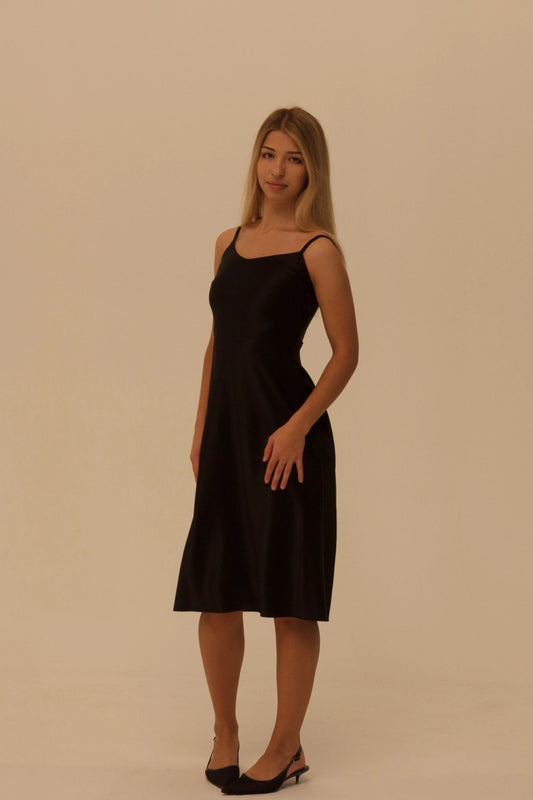
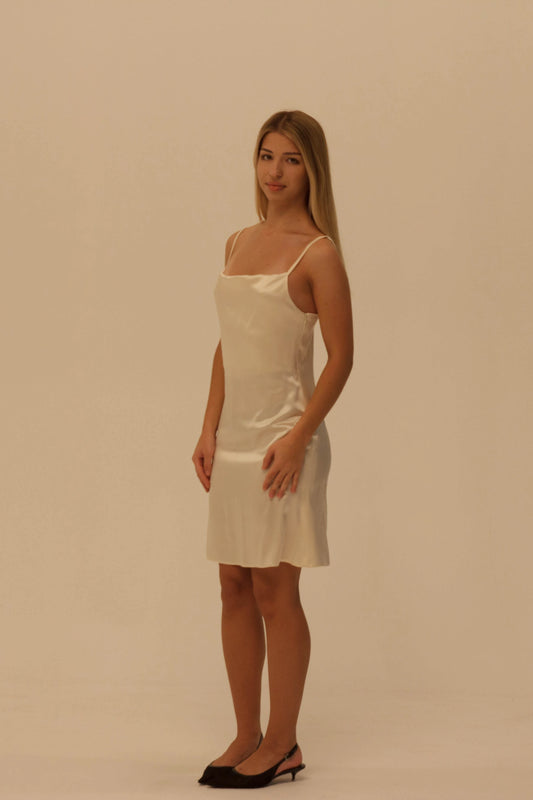
The slip dress on its own is the most elegant version of it.
This works specifically because the dress is doing everything. The silk moves, the bias cut follows the body, the fabric has enough weight to look deliberately chosen rather than casually thrown on. Nothing competes with any of that.
For evening: the dress alone, a heel with a thin strap or a clean pump, and minimal jewelry. One pair of earrings, either small and close to the ear or long and simple. A thin chain if you want something at the neck. Nothing more.
The shoe matters here more than anything else. A heel with a clean line elongates the silhouette and takes the dress from daytime to evening immediately. The style is less important than the cleanliness: no platform, no heavy buckle, nothing that introduces visual weight at the bottom of the look.
Keep makeup considered. A strong lip and nothing else, or a strong eye and nothing else. The dress is already doing a lot of work. The styling should support it rather than compete with it.
This is the version of the look that photographs well and feels even better in person. It requires the least effort and produces the best result.
Look 2: Blazer
A structured blazer over a silk slip dress is one of those combinations that should not work as well as it does.
The contrast is the point. The blazer is structured, the dress is fluid. One is sharp, the other is soft. Together they balance each other in a way that wearing either alone does not produce. The dress softens the blazer. The blazer gives the dress an occasion.
The blazer should be fitted rather than oversized. An oversized blazer over a fluid dress creates too much volume and loses the tension between the two pieces. A blazer that follows the shoulder and chest with a clean line is what makes the combination work.
Color: the easiest approach is a blazer in a neutral that reads as close to the dress as possible. Midnight blue dress with a charcoal or black blazer. An ivory or cream dress with a beige or camel blazer. The two pieces should feel related, not matched.
Shoe options are wide here. A loafer makes it daytime. A pointed flat makes it smart casual. A heel makes it evening or professional. The combination is flexible enough to go wherever the shoe takes it.
This is the most professionally applicable version of the look. It works for any context where a dress alone might feel too casual, and it does so without making the outfit feel like it is trying to compensate for anything.
Look 3: Knit Layering
This is the version that makes a silk slip dress work across seasons rather than only in summer.
A fine knit layered under or over a slip dress changes the weight and feel of the outfit without changing its character. Under the dress: a long-sleeve fine knit in a color close to the dress creates a base that adds warmth and transforms the silhouette slightly. Over the dress: a short or cropped knit in a complementary neutral adds texture and casual ease.
The key word is fine. A chunky knit introduces too much volume and fights the fluid quality of the silk. A fine gauge knit in merino or cashmere sits close to the body and creates texture without bulk.
For the under-layer approach: wear the slip dress over a fitted long-sleeve fine knit, letting the knit show at the arms and neckline. The slip dress becomes the outer layer, the knit provides coverage and warmth. Add ankle boots and the look is entirely appropriate for autumn and early winter.
For the over-layer approach: a slightly cropped fine knit in the same family of color as the dress, worn over it, creates a relaxed version of the look. The hem of the dress is visible below the knit. Flat shoes or low boots. This is the most casual version of these five looks and the easiest one to wear on a day with no particular occasion.
Look 4: Flat Shoes and an Open Shirt
The most underestimated version of this dress is the most casual one.
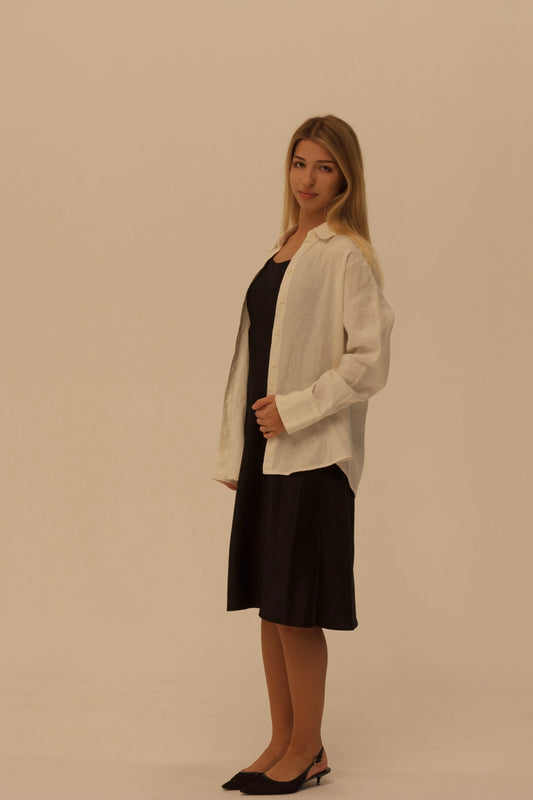
An open overshirt, in linen or cotton, worn over the dress and left unbuttoned. Flat shoes, either a simple mule or a clean leather sandal. Nothing else required.
This combination works because the overshirt provides coverage and context. It signals that the outfit is intentionally casual rather than unfinished. The silk dress underneath elevates what would otherwise be a very simple look. The contrast between the relaxed fabric of the shirt and the quality of the silk creates a combination that looks considered without appearing effortful.
The shirt should be in a neutral: white, ecru, light grey, pale blue. Nothing with a strong pattern. The dress is already the interesting piece. The shirt is a frame for it.
Proportions matter here. The shirt should be long enough to cover the straps of the dress but not so long that it swallows the silhouette entirely. If it falls to hip length, that works. If it is longer, consider knotting it or leaving it partially tucked at the front.
This is the look for a weekend, a market, a casual lunch. It is also, often, the look that receives the most compliments because it appears effortless in a way that the more dressed versions do not.
Look 5: Event Styling
For occasions that require more than a simple outfit but less than a formal gown, the slip dress handles the transition well.
The additions that take it to event level are specific. A quality evening bag, small and structured, in leather or a fabric that reads as deliberate. A heel with some detail, not necessarily elaborate, but something that signals occasion. Jewelry that is slightly more present than usual: a pendant necklace, a cuff, earrings with some weight to them.
The silk does the work here. At an event, the quality of the fabric is visible in motion in a way that it is not in a photograph. The way 25mm mulberry silk moves under evening light is not something that needs to be pointed at. It announces itself.
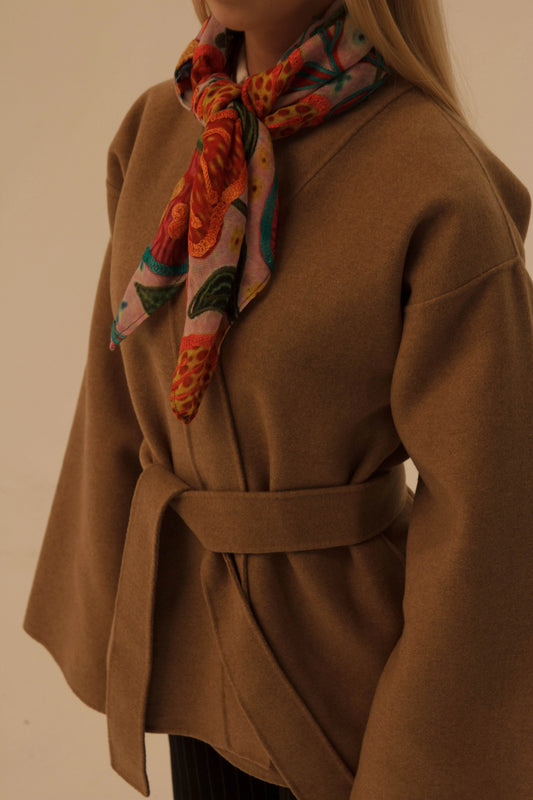
One addition that works particularly well for events: a fine wool or cashmere wrap or stole in a color close to the dress. It provides warmth when needed, adds an element of occasion, and can be draped differently depending on the context. This is also a practical choice: evening events often involve temperature fluctuations between outdoor and indoor spaces, and a wrap allows you to adapt without changing the character of the look.
Avoid: a heavy coat over an evening outfit when arriving, if possible. If a coat is necessary, a simple, clean line coat in a neutral that does not draw attention away from what is underneath.
The Principle Behind All Five
The slip dress works in every one of these combinations for the same reason: it takes direction from what surrounds it without losing its own character.
Add a blazer and it becomes professional. Add a knit and it becomes seasonal. Add nothing and it becomes evening. The silk quality is present in all five versions. The bias cut means it moves correctly in all five. The fit, when made correctly, means it sits right in all five.
That is what a capsule piece actually means. Not something you can technically wear anywhere. Something that genuinely works everywhere you wear it, without compromise in any direction.
Bradic silk slip dresses are made from 25mm mulberry silk, bias cut, French seams, and made to your measurements in Croatia. bradic.eu