What to Wear to an Elegant Dinner When You Don't Want to Look Overdressed
Miron BradicThe anxiety is real. Here is how to resolve it once and for all.
There is a specific kind of dressing panic that happens before an elegant dinner. Not a gala, not a wedding, not a casual dinner with friends. Something in between. A nice restaurant, someone's home with good wine and people you want to impress, a birthday celebration at somewhere with a dress code that says smart casual and means nothing useful.
You stand in front of your wardrobe and the problem is not that you have nothing to wear. The problem is that everything either feels like too much or not enough. The cocktail dress feels performative. The simple trousers feel underdressed. You end up changing three times and leaving the house still uncertain.
This happens because elegant dressing for in-between occasions is genuinely one of the harder problems in a wardrobe. Formal occasions are easy: the rules exist and you follow them. Casual occasions are easy: you wear what you like. The middle ground requires judgment, and judgment requires knowing what you're actually trying to achieve.
Here is what you are trying to achieve: you want to look like someone who put thought into getting dressed without looking like someone who spent the entire afternoon doing it. You want to be appropriate for the occasion without being costumey. You want to feel comfortable enough that you forget about what you're wearing by the time the first glass of wine arrives.
That is the target. Everything below is about how to hit it.
Why Overdressed Is Worse Than Underdressed
This sounds counterintuitive but it is worth understanding before anything else.
Underdressed at an elegant dinner is noticeable. Overdressed is worse. Underdressed communicates that you perhaps misread the occasion. Overdressed communicates that you tried very hard and overcorrected, which reads as anxiety rather than confidence. The most socially comfortable people at any dinner are almost never the most elaborately dressed ones.
The goal is not to disappear. It is to look like you belong in the room without having announced your arrival through your outfit. Clothing should be the background to the conversation, not the foreground.
This is why the principles of quiet luxury apply so directly to elegant dinner dressing. Quiet luxury is not about spending less or dressing simply for its own sake. It is about choosing pieces where the quality is present without being stated, where the effort is visible to those who know what they're looking at and invisible to everyone else.
The Actual Problem With Most Elegant Dinner Outfits
Most women default to one of two approaches for elegant dinners, and both have a consistent failure mode.
The first approach is the occasion dress: something bought specifically for evenings, heavily embellished or very formal, worn once every few months. The failure mode is that these dresses often look like dresses performing occasion-ness rather than dresses that actually suit the occasion. The sequins, the structured bodice, the very specific heel: it all signals effort in a way that tips past elegant into overdone.
The second approach is assembling an outfit from existing daywear and hoping the addition of heels and jewelry transforms it into an evening look. The failure mode here is the opposite: nothing quite elevates and the whole thing reads as daywear at an occasion.
The solution to both is simpler than either: a piece that is inherently elegant without being inherently formal. Something that does not need to be transformed into an evening look because it already is one, and that does not read as occasion-specific because its elegance is more permanent than that.
What Actually Works: The Principles
Fabric over embellishment. The fastest route to looking overdone is embellishment: sequins, heavy beading, elaborate prints. These announce themselves and require an occasion large enough to justify them. Fabric quality achieves the same effect without the announcement. Quality silk under good light has a presence that no amount of embellishment on cheap fabric can replicate. The fabric does the work silently.
Fit over everything else. A perfectly fitting simple dress is more elegant than an elaborate dress that fits approximately. This is always true but especially true for evening occasions where you will be standing, sitting, eating, and moving over several hours. Something that fits exactly stays correct throughout. Something that fits approximately requires management, and managing your clothing at a dinner is the fastest way to look uncomfortable.
One thing at a time. Elegant dressing is largely about restraint. If the dress is the piece, the jewelry is quiet. If you are wearing a statement earring, the dress is simple. If the shoes have detail, the bag is plain. Elegant outfits have a hierarchy. One element leads. Everything else supports it. When multiple elements compete for attention simultaneously, the result reads as effort rather than ease.
Comfort is not optional. A dress you are physically uncomfortable in will not produce a good evening. If you are pulling at something, adjusting straps, or aware of your outfit at any point after the first five minutes of wearing it, it is the wrong dress. The best elegant outfits are ones you forget about because they fit and move correctly. That forgetting is what allows you to be present at the dinner rather than managing your clothing.
The Pieces That Work
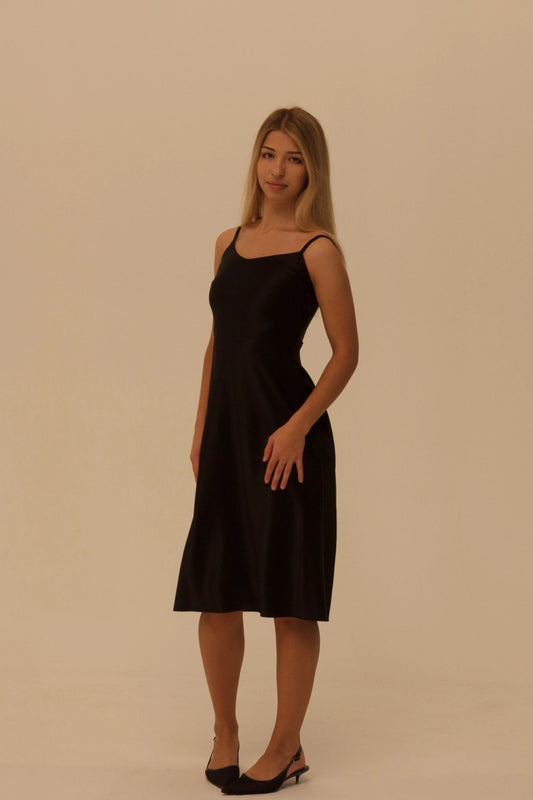
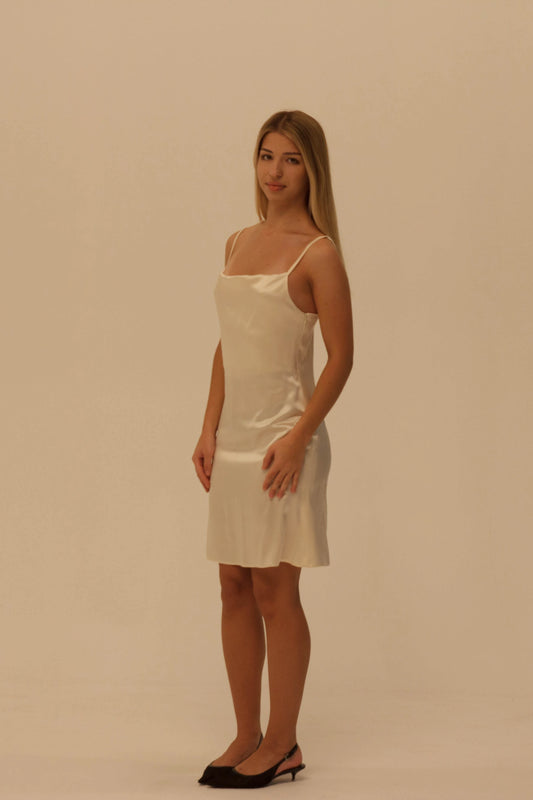
A silk slip dress. This is the most reliable elegant dinner piece that exists and it is underused by most women who own one.
The slip dress works for elegant dinners because it sits exactly in the right register. It is clearly evening without being formal. It is simple without being casual. The silk reads as luxury without announcing itself. The bias cut creates a silhouette that moves correctly when you walk to the table, stands correctly when you are introduced to people, and sits correctly throughout the meal.

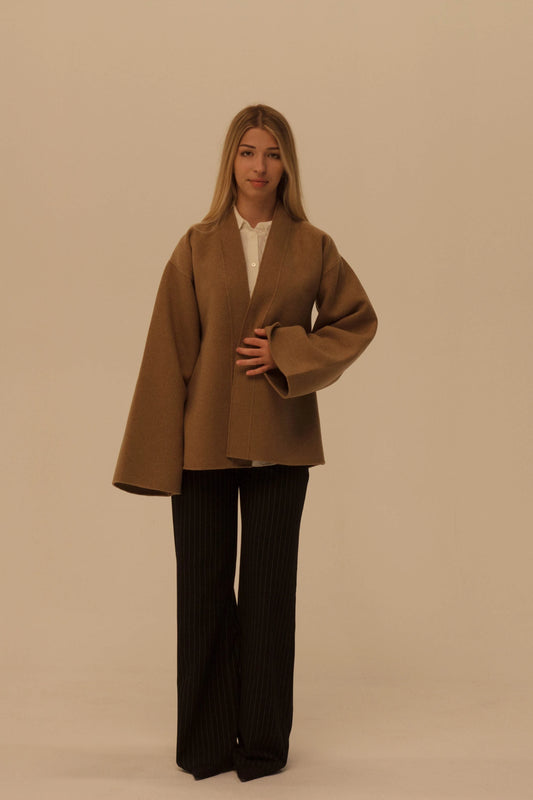
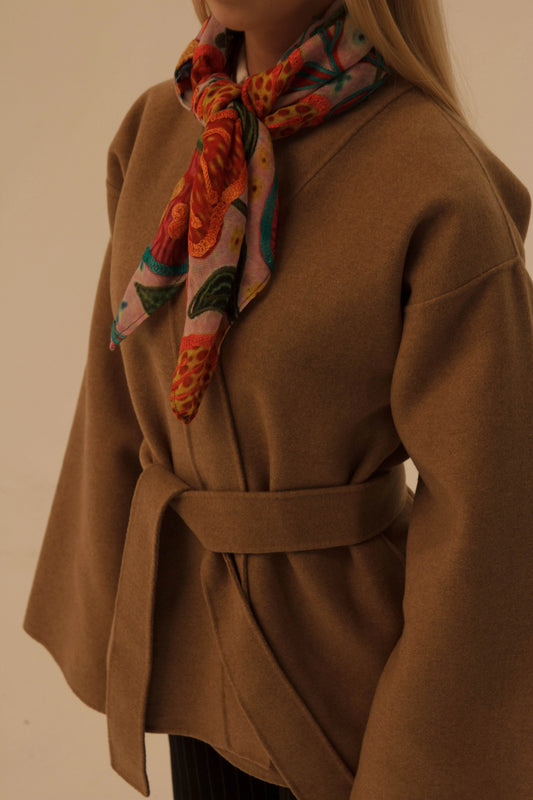
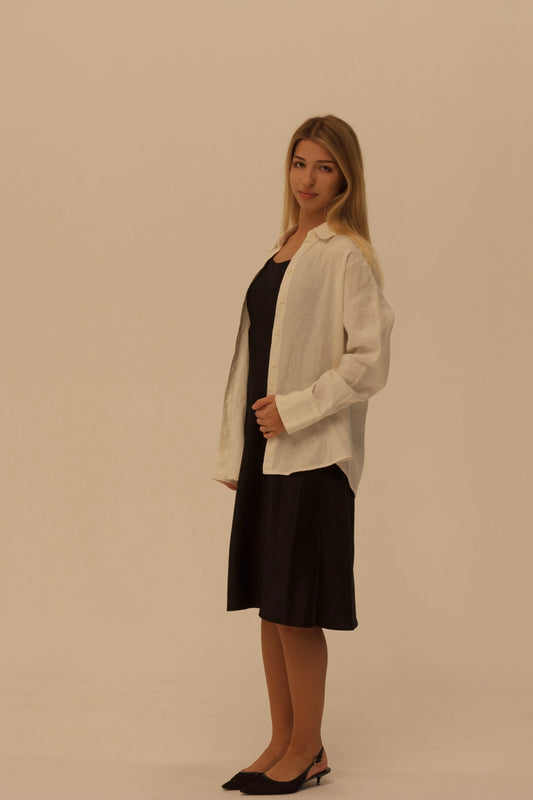
Worn alone with a heel, it is evening. Worn with a cashmere wrap for a cooler venue or someone's home, it is refined casual. Worn with a blazer, it crosses into professional elegance that works for business dinners. The same piece covers most of the dinner contexts you will encounter.
The specific detail that makes it work: there is nothing on a slip dress to go wrong. No embellishment that tips into overdone, no structure that becomes uncomfortable after two hours, no heel height built into the design that commits you to a specific shoe. The dress provides the foundation and you adjust everything else around it.
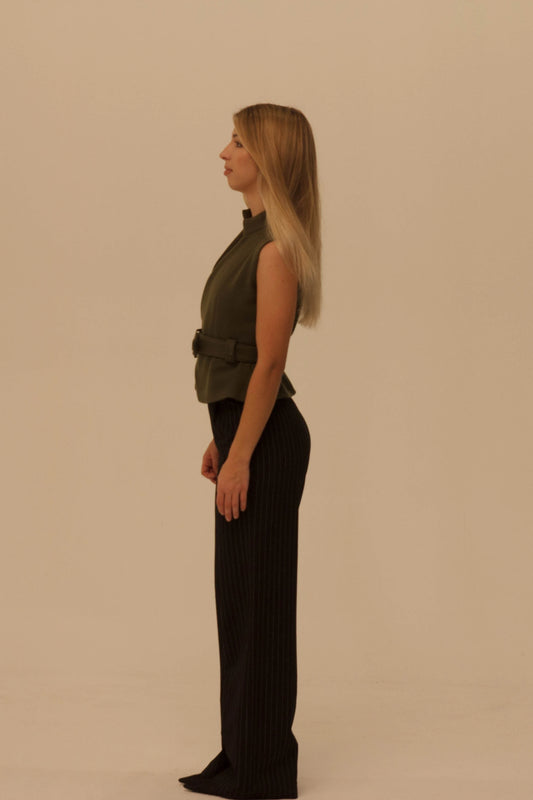
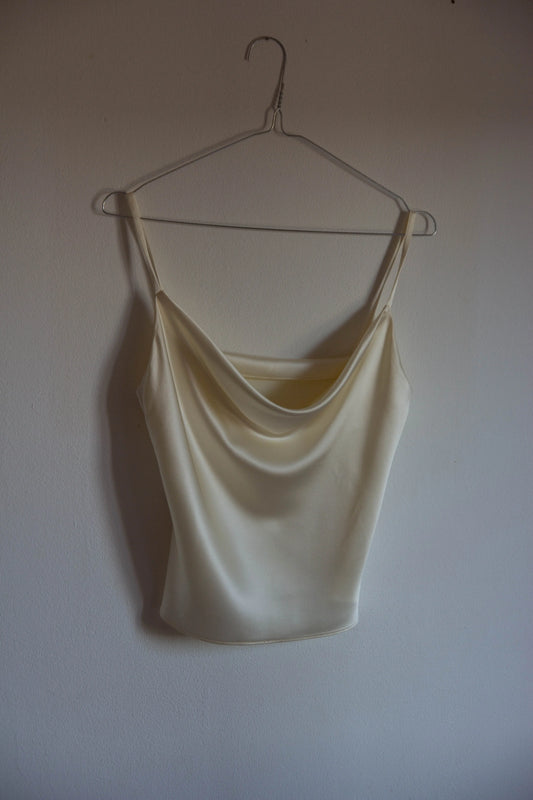
Tailored trousers with a considered top. The alternative to a dress that consistently works. Wide-leg or straight-leg trousers in quality wool or a substantial crepe, with a simple silk or fine knit top. The combination reads as intentionally elegant rather than casually dressed because both pieces are clearly quality.
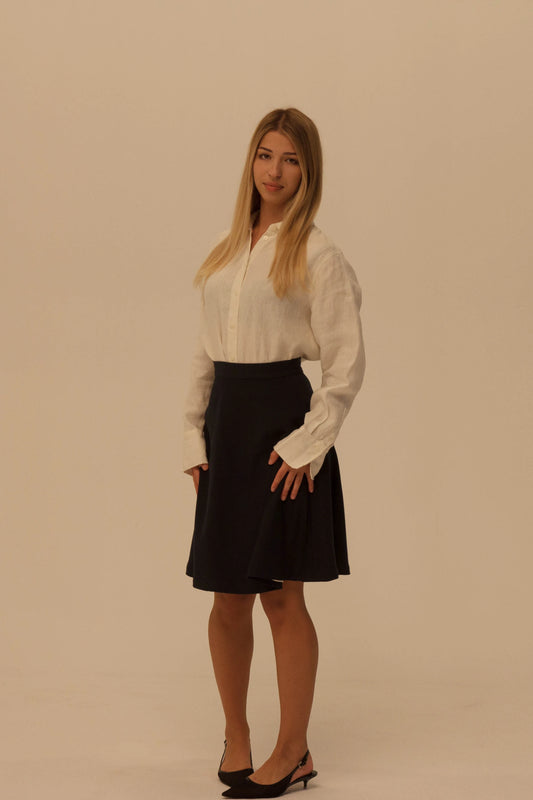
The failure mode here is choosing trousers that are too casual in fabric (cotton, linen at the wrong weight) or a top that is too simple in a way that reads as daywear. The top needs to do something: a fine silk with good drape, a fitted fine knit, something with a considered neckline. The trousers provide the structure. The top provides the elegance.
A minimal dress in quality fabric. Not a slip dress specifically but the same principle: a dress with a clean silhouette in a fabric that reads as considered. Crepe, quality jersey, fine wool. Something that falls correctly and has enough weight to behave well. No embellishment needed. The cut and fabric are the thing.
What to Avoid
Anything you have never worn before. This is practical advice that sounds obvious and is consistently ignored. An untested dress at an elegant dinner is a liability. You do not know how it moves, whether it rides up when you sit, whether the neckline behaves, whether the length works with the shoes you planned. Wear something you have worn at least once. Save the new piece for a lower-stakes occasion first.
Shoes that limit your movement. An elegant dinner involves more standing than you expect: arrivals, introductions, cocktail hour if there is one, saying goodbye. Shoes you cannot walk in for two hours are the wrong shoes. A heel you can actually wear is more elegant than a heel you perform wearing. A pointed flat or a low heel with a clean line is always appropriate. An impossible heel that requires management is not.
Too much of any one thing. Heavy jewelry with an elaborate dress. Strong makeup with a statement outfit. Multiple competing elements in the same look. Any of these tips the balance from elegant to overdone. The standard edit: get dressed, look in the mirror, remove one thing.
Fast fashion in quality contexts. This is not snobbery. Thin fabric behaves differently under occasion lighting than it does under store lighting. It creases more quickly, it moves less well, and it shows wear after a few hours in a way that quality fabric does not. For an occasion where you will be observed across a table for several hours, the fabric quality matters more than it does in almost any other context.
Specific Scenarios
A restaurant dinner, 6 to 10 people. The most common elegant dinner context. A silk slip dress with a heel and minimal jewelry covers this entirely. If you want to add a layer, a fine blazer rather than a cardigan: a cardigan reads slightly too casual for a good restaurant. Alternatively, quality trousers with a silk blouse. Either works. Neither requires further thought.
Dinner at someone's home. Slightly different register than a restaurant because you will likely be on their furniture, potentially helping in the kitchen, definitely not in a controlled environment. The slip dress still works but with a wrap or fine knit rather than bare. Comfortable shoes are more important here because you will be standing on hard floors. A cashmere wrap is practically perfect for this context: warm, elegant, easy to remove.
A business dinner. The blazer-over-dress combination is the most reliable answer. It reads as professional without reading as corporate. A silk slip dress under a well-fitted blazer is elegant and appropriate for almost any business dinner context. Alternatively, quality trousers with a silk blouse and a blazer. The key is that the quality of each piece is visible: this is not the time for approximation.
A celebratory dinner, birthday or similar. Slightly more latitude than a standard elegant dinner. Something with a little more presence is appropriate: a richer color, a slightly more deliberate shoe, jewelry that is a step up from minimal. The slip dress in a deeper color with a heel that has some detail. Not more elaborate necessarily, just more present.
The Evening Before the Dinner
Decide what you are wearing the day before. Not the morning of.
This sounds like minor logistics advice and it is actually the most useful thing in this entire piece. Outfit decisions made under time pressure and anxiety produce worse outcomes than outfit decisions made calmly with enough time to reconsider. Lay the full look out the evening before: dress, shoes, bag, jewelry, any layer. Look at it together. Make any changes then, not at 7pm when you need to leave at 7:30.
When you put it on the next day, you are putting on a decision you already made and feel good about. That composure is visible in how you wear the outfit. It is also the thing that makes elegant dressing look effortless: the effort happened earlier, quietly, so that by the time you are actually dressed, there is nothing left to figure out.
The Simple Version
You want to look elegant at a dinner without looking like you tried too hard. The way to do that is to choose one genuinely good piece in quality fabric that fits correctly, and let everything else be quiet around it.
A silk slip dress with a heel. Quality trousers with a silk top. A minimal dress in a fabric that behaves well. Any of these, with simple accessories and comfortable shoes, will be right for almost every elegant dinner you attend.
The goal is to be the person at the table who looks completely at ease. Not the most elaborate, not the most casual. The one who looks like they simply have good taste and know how to use it.
That is achievable with one good piece and the confidence to leave it at that.