Why "Flattering" Is Usually About Proportion, Not Body Type
Miron BradicYou've heard it a thousand times: "This style is flattering for your body type."
Hourglass should wear this. Pear shapes should avoid that. Apple figures need structure here. Rectangle bodies need volume there.
But if you've ever followed this advice and still felt like something was off, there's a reason.
The entire concept of dressing for "body types" misses the point.
What actually makes clothing flattering has less to do with matching your body to a category and more to do with understanding proportion. And proportion is individual, specific, and entirely different from the oversimplified body type system fashion magazines have sold us for decades.
The Body Type System Doesn't Work
The idea of body types sounds logical. Categorize bodies into a few simple shapes, create rules for each category, and everyone knows what to wear. Simple. Efficient. Wrong.
Here's why it fails:
Bodies are three-dimensional and infinitely variable. Reducing them to five or six categories means forcing millions of different proportions into arbitrary boxes. Your shoulders, waist, hips, torso length, leg length, and dozens of other measurements create a unique proportion that doesn't match a predetermined category.
Even if you do fit neatly into one category, the advice given is often contradictory or based on outdated ideas about what bodies "should" look like. The goal is frequently to make all bodies appear closer to an idealized hourglass, regardless of whether that serves the actual person.
Most importantly, the body type system treats your body as a problem to solve rather than a form to dress beautifully. It's built on the idea that certain proportions are wrong and need to be hidden, minimized, or "corrected" through clothing choices.
This is fundamentally the wrong approach.
What Actually Creates "Flattering"
When clothing looks good on you, it's because the proportions of the garment work with the proportions of your body.
Proportion in clothing means:
The relationship between different elements of a garment. Where the waist sits relative to the hem. How wide the shoulders are compared to the hips. The length of the bodice versus the length of the skirt. The visual weight of the top versus the bottom.
Proportion in your body means:
The relationship between different parts of your form. Your shoulder width compared to your hip width. The length of your torso compared to your legs. Where your natural waist sits. The curve or straightness of various lines.
Flattering happens when garment proportions complement body proportions. Not hide them. Not correct them. Complement them.
The Difference Between Balance and Correction
The body type system operates on correction. If your hips are wider than your shoulders, add shoulder pads to "balance" them. If you have no defined waist, wear belts to "create" one. If you're short, wear heels to "appear" taller.
This is exhausting and often counterproductive.
True proportion-based dressing operates on balance, which is different. It asks: given your specific proportions, where should visual interest sit? What creates harmony? What emphasizes the lines you already have rather than fighting them?
Take the example of torso length. If you have a long torso and shorter legs, the body type system might tell you to wear high-waisted everything to "create the illusion" of longer legs.
But consider what happens:
High-waisted trousers on a long torso can cut you at an awkward point, making the torso look even longer and the legs shorter by comparison. The "correction" makes the issue more pronounced.
Proportion-based thinking asks different questions:
Where does the waistline of these trousers actually sit on your body? Does that create a pleasing division of space, or does it create visual awkwardness? Would a mid-rise that sits at your natural waist create better overall balance?
The answer depends on your specific measurements, not your body type category.
Understanding Your Actual Proportions
Instead of determining whether you're an hourglass or a rectangle, understand the specific proportions that make up your form.
Key measurements to consider:
Shoulder to waist length. This determines how high-waisted or low-waisted garments should sit on you. Someone with a short torso might find high-waisted trousers sit almost under their bust, creating an unflattering proportion. Someone with a long torso might find the same "high-waisted" trousers sit at their natural waist, creating perfect balance.
Waist to hip. Not whether your hips are "wide," but where they sit relative to your waist. This affects skirt and dress silhouettes. A dropped waist dress might hit perfectly on someone whose hips sit lower, but cut awkwardly on someone whose hips are higher up.
Shoulder width relative to hip width. This isn't about "balancing" one with the other, but understanding how structured shoulders versus soft shoulders will look on you. Broad shoulders can carry structured tailoring beautifully. Narrower shoulders might be overwhelmed by heavy structure.
Total height versus leg length versus torso length. Two people can be the same height with completely different proportions. One might have a long torso and shorter legs. The other might have a shorter torso and longer legs. The same dress length will hit them at entirely different points on the leg, creating different visual effects.
Vertical versus horizontal proportions. Some bodies have more vertical emphasis. Long lines, less curve. Others have more horizontal emphasis. Curves, shorter vertical lines. Neither is better, but they require different approaches to proportion.
How Garment Proportions Work
Every piece of clothing has built-in proportions that interact with your body's proportions.
A dress with an empire waist sits just under the bust. On someone with a short torso, this might be flattering because it emphasizes the longest part of the body (from under-bust to hem). On someone with a long torso, it can make the lower body look disproportionately large because so much length is below the waistline.
A blazer with a defined waist creates visual interest at the natural waist. On someone whose torso and leg proportions are roughly equal, this creates pleasing symmetry. On someone with very long legs and a short torso, it can make the torso look compressed.
Wide-leg trousers create horizontal volume at the bottom. On someone with longer legs, this can look elegant and balanced. On someone with shorter legs, the horizontal emphasis can overwhelm the vertical line unless the waist is positioned carefully.
The key insight: None of these effects are about "body type." They're about the mathematical relationship between where the garment's design elements sit and where your body's natural proportions create emphasis.
The Role of Visual Weight
Proportion isn't just about measurements. It's also about visual weight, the perception of how much space something occupies.
Visual weight is created by:
Color. Dark colors recede visually. Light colors advance. This isn't about making things "look smaller" or "look bigger," but about where you want visual emphasis.
Texture. Smooth fabrics have less visual weight than textured or voluminous fabrics. A smooth silk blouse has different visual weight than a chunky knit sweater, even if they're the same physical size.
Pattern. Large patterns, high contrast, and busy prints all create visual weight. Solid colors or subtle patterns have less visual weight.
Structure. Structured, architectural clothing has more visual weight than soft, drapey clothing.
Understanding visual weight lets you create balance across an outfit. If you're wearing voluminous trousers (high visual weight on the bottom), a sleek fitted top (low visual weight on top) creates a specific proportion. Reverse it, and you create a different proportion.
Neither is inherently "flattering." What matters is whether the resulting proportion works with your body's proportions.
Proportion in Practice: Real Examples
Let's look at how proportion-based thinking differs from body-type thinking in practice.
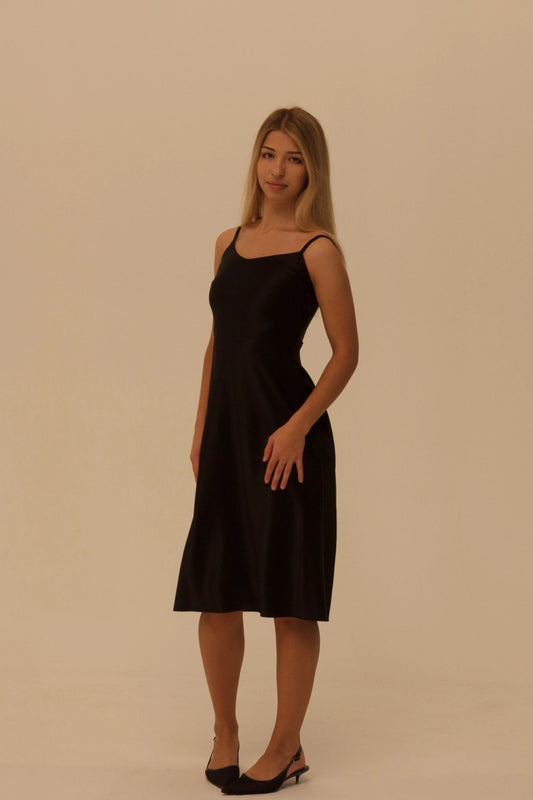
Scenario: You want to wear a slip dress.
Body type approach: Determines your category. If you're "apple-shaped," you're told to avoid slip dresses because they don't provide structure and might emphasize your midsection. If you're "pear-shaped," you're told slip dresses could work if you add a structured jacket on top to "balance" your hips.
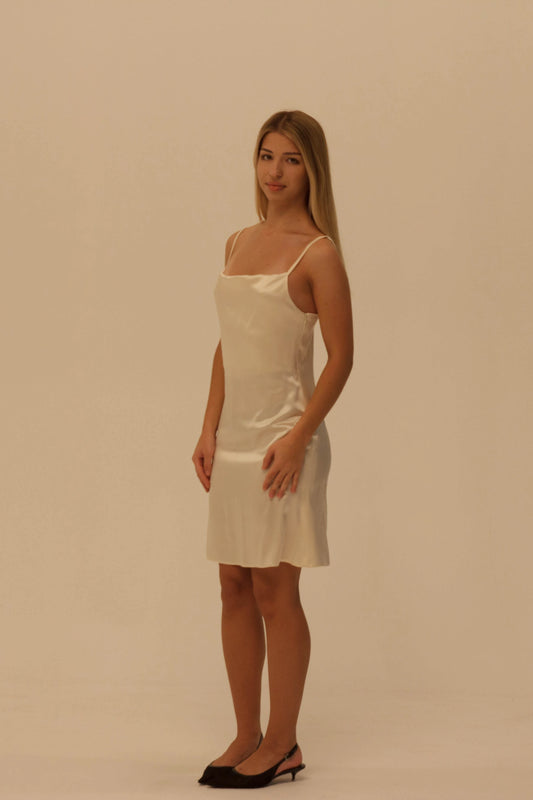
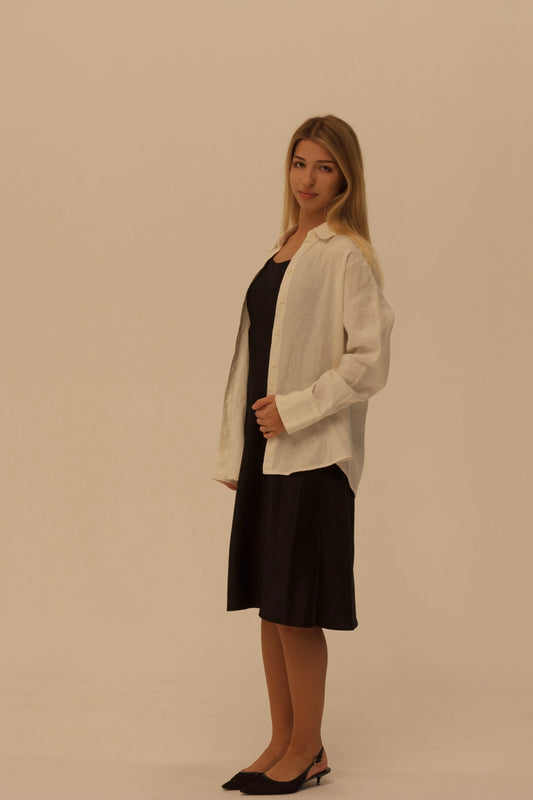
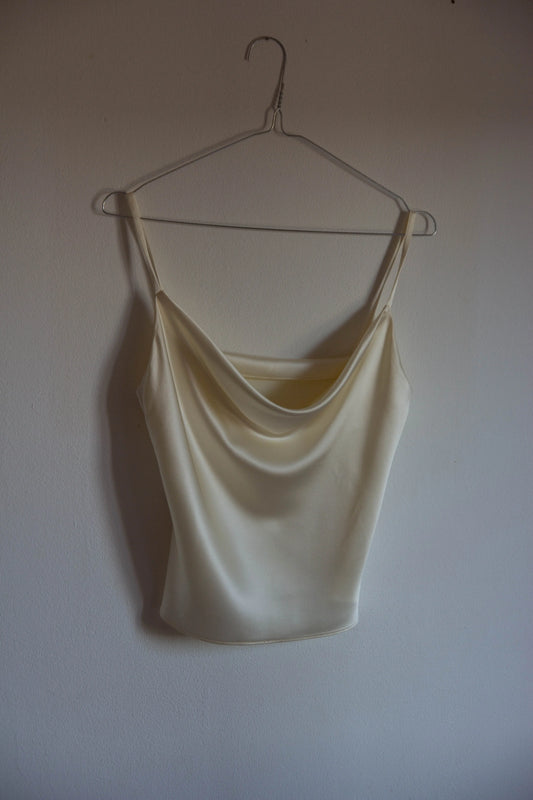
Proportion-based approach: Considers the specific slip dress and your specific proportions. Where does the neckline sit? How does the bias cut interact with your body's curves? What length creates the most pleasing line on your particular leg length? Does the dress's proportions (where it's fitted, where it's loose) complement your proportions?
Result: Someone told they're the "wrong" body type might find a slip dress that fits their proportions perfectly. Someone told slip dresses are "right" for their type might find they don't work at all because the proportions don't align.
Scenario: High-waisted trousers.
Body type approach: If you have a short torso, avoid high-waisted trousers. They'll make your torso look even shorter. If you have a long torso, wear high-waisted trousers to "balance" your proportions.
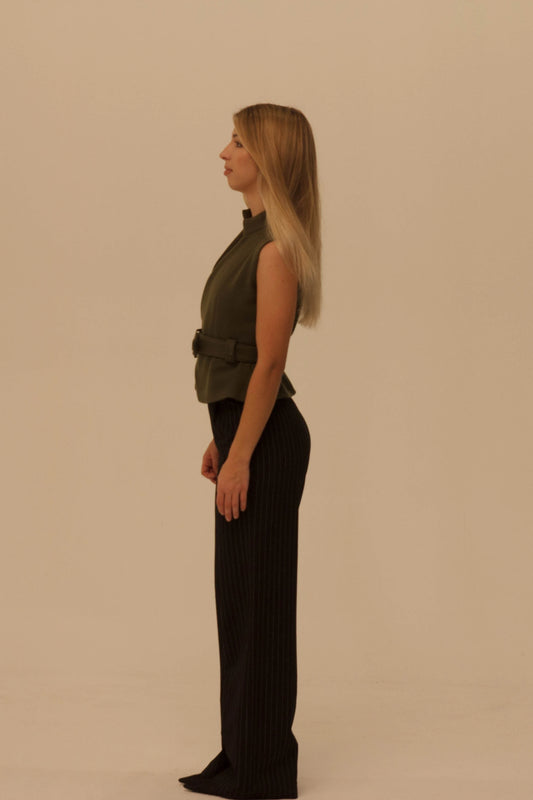
Proportion-based approach: Measures where "high-waisted" actually sits on your body. On some people, high-waisted trousers sit at the natural waist, creating beautiful proportion. On others, they sit several inches above the natural waist, creating an awkward division. Try them on and observe where the waistband actually hits you, then decide if that creates pleasing proportion.
Result: Short-torso people might find certain high-waisted styles work beautifully if the waistband sits at their natural waist. Long-torso people might find high-waisted styles uncomfortable or unflattering if they're forced to wear them much higher than feels natural.
Made to Measure: When Proportion Becomes Personal
This is where made-to-measure construction becomes relevant.
Ready-to-wear clothing is designed for standardized proportions. A size 38 dress assumes specific ratios between bust, waist, hip, shoulder width, torso length, and sleeve length. If your proportions match those ratios, the dress fits. If they don't, it doesn't.
This isn't about your body being wrong. It's about the proportions not matching.
Made-to-measure allows garments to be constructed for your specific proportions. The waistline sits exactly where your waist is. The shoulder seam hits exactly where your shoulder ends. The sleeve length is precisely right for your arm length. The hem falls exactly where it should for your height and leg length.
This creates inherently flattering proportion because the garment's proportions are built around your body's proportions from the start.
At Bradic, we design pieces with clean lines and minimal detail specifically because proportion does the work. When a garment fits your proportions correctly, you don't need embellishment or tricks to make it flattering. The proportion itself creates the effect.
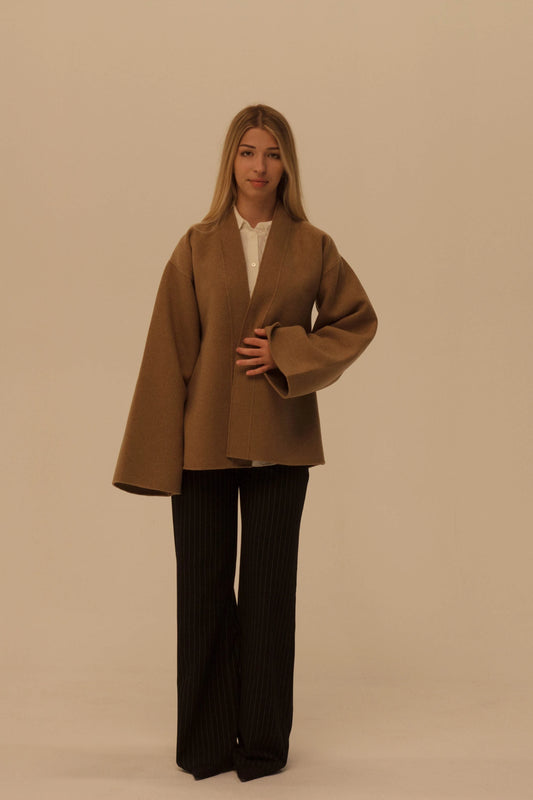
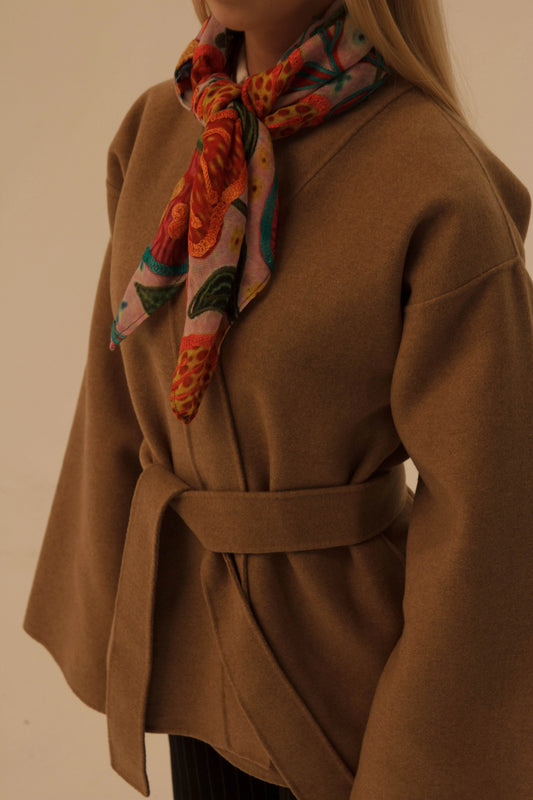
A coat cut to your exact shoulder width and torso length frames your body perfectly. A dress with the waist placed at your natural waist creates ideal balance. Trousers hemmed to your precise leg length create the most pleasing line.
This is flattering created through precision, not through trying to make your body appear different than it is.
How to Evaluate Proportion Yourself
You don't need to understand complex pattern-making to evaluate whether something is proportionally flattering on you.
When trying on clothing, ask:
Where does this garment divide my body visually? Does it create a division that feels balanced, or does it cut me at an awkward point?
Do the garment's key design elements align with my body's natural lines? Does the waist of the dress sit at my waist, or above or below it? Do the shoulders of the jacket align with my shoulders?
What is the relationship between the garment's different sections? If it's a dress, what's the ratio of bodice to skirt length? Does that ratio work with my torso-to-leg ratio?
How does visual weight distribute across my body in this outfit? Is there balance between top and bottom? Does one area overwhelm the other?
Does this create harmony or tension? Harmony means the garment and your body work together. Tension means they're fighting each other.
Trust what you see, not what you've been told. If body type rules say something should flatter you but it doesn't, the rules are wrong. If something "shouldn't work" but looks great, ignore the rules.
The Freedom of Proportion-Based Dressing
Once you stop thinking in terms of body types and start thinking in terms of proportion, dressing becomes simpler.
You're not following rules about what your "type" can or cannot wear. You're observing what proportions work on your specific body and choosing accordingly.
You're not trying to hide, minimize, or correct parts of yourself. You're working with your actual form to create pleasing visual balance.
You're not limited to a narrow range of "flattering" styles. You can experiment with different proportions and silhouettes, evaluating each based on how it works with your body rather than whether it follows body type rules.
This is more honest, more effective, and far more freeing.
That's what we make.