Why Is Limited Edition Clothing More Valuable Than Mass Production
Miron BradicThe fashion industry produces 100 billion garments per year. That number should bother you more than it does.
Walk into any high street store today and you'll find hundreds of options. Dozens of jacket styles, endless colorways, new arrivals every week. The industry calls this choice. What it actually produces is the opposite: a state of abundance so total that nothing feels worth choosing.
When everything is available, nothing is special. When every piece can be replaced tomorrow with something similar at the same price, ownership means nothing. You're not choosing a garment. You're renting a trend until the next one arrives.
This is the core problem with mass production fashion, and it's why a different approach produces genuinely more valuable clothing. Not more expensive for its own sake. More valuable in every sense that actually matters.
The Illusion of Choice in Modern Fashion
Fast fashion operates on a specific psychological mechanism. Volume creates the impression of variety. New arrivals every week create the impression of relevance. Low prices create the impression of accessibility.
What it doesn't create is clothing worth keeping.
The disposable mindset that fast fashion depends on is not accidental. It's the business model. A garment you keep for ten years represents one sale. A garment you replace every season represents five or six. The economics of mass production require you to buy again, which means the product needs to fail, either physically or aesthetically, quickly enough that you do.
The result is wardrobes full of things that felt right in the moment and feel meaningless within months. The dopamine hit of the purchase fades faster than the garment does, and by the time the garment shows wear, you've already moved on mentally anyway.
This is not how clothing used to work. And it's not how clothing needs to work.
What Limited Edition Actually Means
The phrase has been so thoroughly co-opted by marketing that it's worth establishing what it actually means before discussing why it matters.
Fake scarcity is a drop with a countdown timer on a website. A brand that produces 10,000 units of something and calls it limited because the colorway will change next season. A "limited edition" collaboration that sells in every store globally. These are marketing constructs designed to create urgency without actual constraint.
Real production limits come from a different place entirely. They come from the physical reality of how the garment is made.
If a piece is made by hand, by a single artisan or a small team, there is a genuine ceiling on how many can exist. Not an artificial ceiling imposed for positioning purposes, but a real one imposed by time, skill, and attention. An artisan who takes several days to complete a single piece cannot produce a thousand of them. The scarcity is not a claim. It is a consequence of the process.
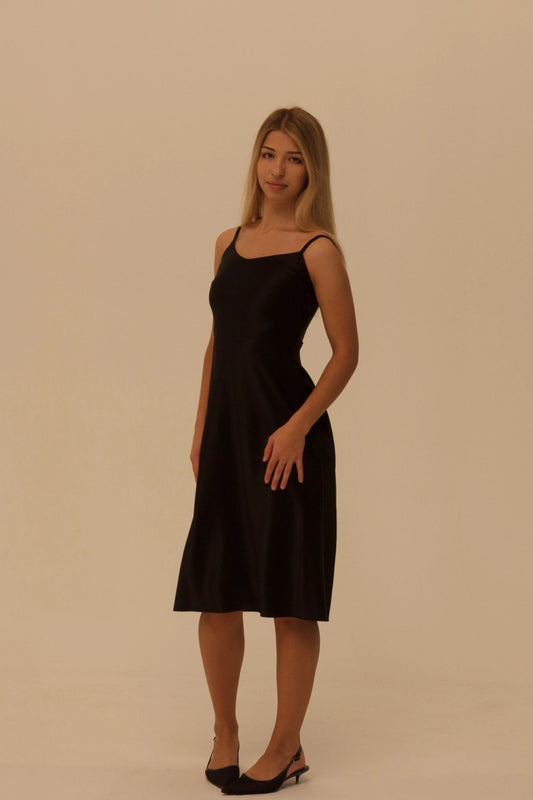
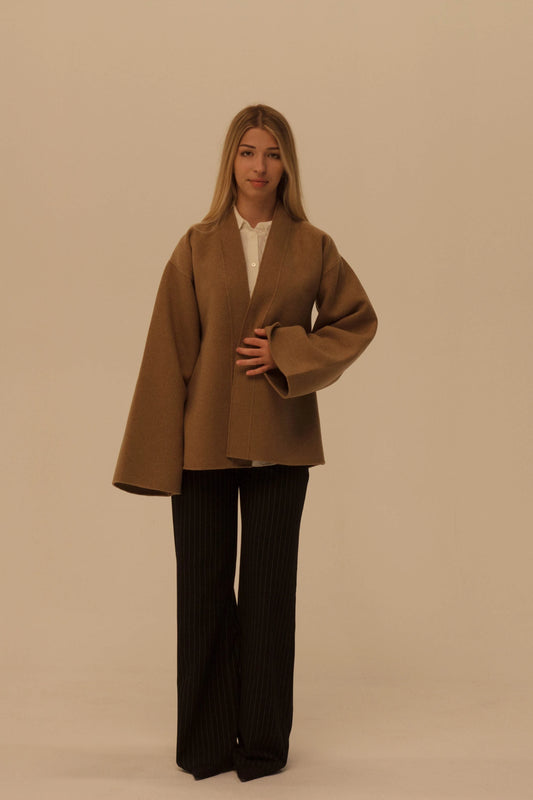
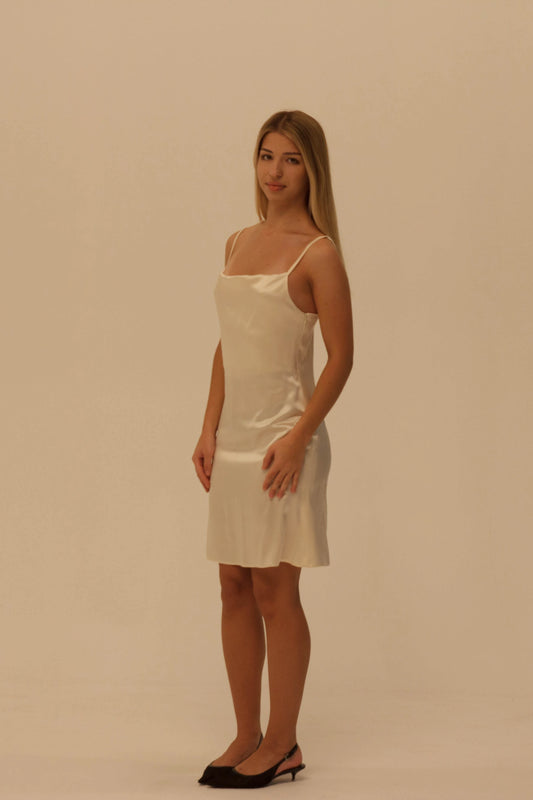
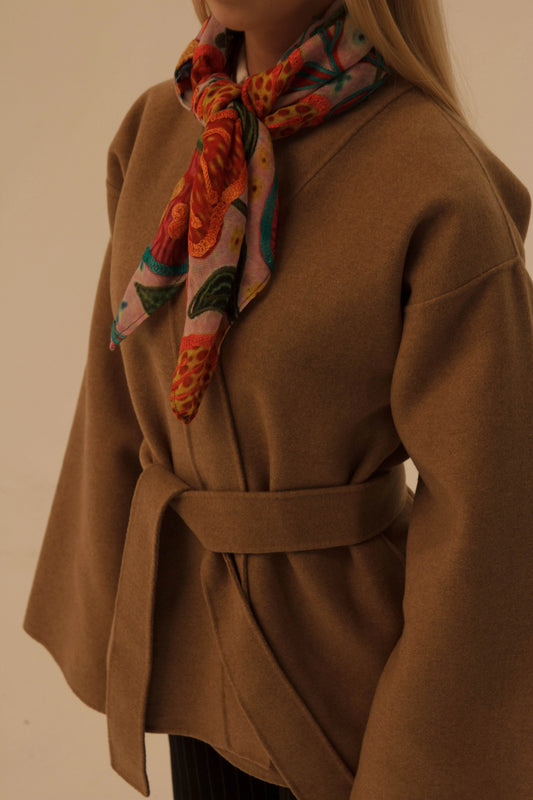
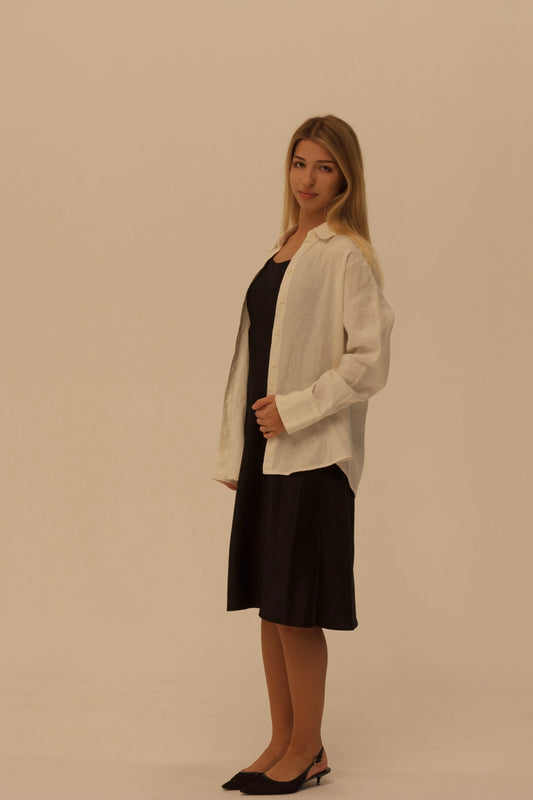
When Bradic produces thirty or fifty pieces of a design, that number is not chosen for marketing effect. It reflects what a small Croatian atelier can produce at the standard the garment requires. The limit is the craft. This is the distinction that matters: scarcity as a byproduct of quality versus scarcity as a sales tactic.
Why Scarcity Changes Perception
Behavioral economics has documented extensively what most people understand intuitively: things that are harder to obtain feel more valuable than things that are freely available.
This is not irrational. It reflects real information. When something is scarce, the scarcity usually indicates something meaningful about it, that it required significant skill to make, that the materials are genuinely rare, that the time invested in its production was substantial. Scarcity is often a proxy for quality, and our perception of value responds accordingly.
The psychological term for this is reactance: the increased desire for something when access to it is restricted. But beneath the psychological mechanism is a practical reality. Genuinely scarce things, things that required real skill and time to produce, usually are better than abundant things. The perception and the reality tend to align.
Mass production works in the opposite direction. The more of something that exists, the more interchangeable each unit becomes with every other unit. Owning one of a million identical jackets tells you nothing about the jacket or about yourself. Owning one of thirty tells you something about both.
The Shift From Ownership to Identity
Clothing is never purely functional. It has always communicated something about the person wearing it, their values, their taste, their relationship to the world around them.
Mass production has made this communication increasingly difficult. When the same jacket exists in every city, worn by people who found it on the same algorithm-recommended page, it communicates participation in a trend. Nothing more. The garment says "I was online when this was popular." That's a thin message.
A limited piece communicates differently. It communicates that you sought something specific, that you valued quality over convenience, that you chose a garment that fewer people own and that required more to make. Whether anyone else knows this is irrelevant. You know it. The garment reflects a decision rather than a default.
This is what "not for everyone" means in practice. Not exclusion as an aspiration, which is a different and less interesting thing. But the natural consequence of producing something that requires a specific kind of buyer: one who is willing to wait, to invest, to choose deliberately. Not everyone is. That's not a criticism. It's a description.
The pieces that end up meaning something to their owners are almost never the ones bought impulsively from an infinite selection. They're the ones chosen carefully, from a limited field, for reasons that had something to do with the object itself.
Craft Over Quantity
There is a direct relationship between how many pieces are made and how much attention each one receives.
A factory producing ten thousand units of a jacket has a fundamental constraint: consistency at scale requires simplification. Details that would take extra time are removed or automated. Materials are chosen for how they perform in volume production, not for how they feel or age. Quality control operates at a statistical level, acceptable defect rates rather than individual inspection.
A small atelier producing thirty pieces of the same jacket has a different relationship to the work entirely. Each seam can be pressed individually. Each hem can be hand-finished. Each piece can be inspected as a complete object before it leaves. The time invested per piece is not a cost to be minimized but a standard to be maintained.
This is why Bradic produces a different result from what factories produce. Not because Croatia has some mystical craftsmanship quality unavailable elsewhere, but because the scale of production is compatible with the level of attention the work requires. Small batches allow individual attention. Individual attention produces better garments.
The garment is not better because it was made by hand. It is better because being made by hand was the only method compatible with making it correctly.
Why Limited Pieces Age Better
A mass-produced piece ages in two ways simultaneously. The physical material deteriorates, and the design dates.
The physical deterioration is usually faster than it should be because the materials and construction were optimized for cost. Pills appear, seams pull, shape distorts. Within a few seasons, the garment looks worn in ways that have nothing to do with how often it was worn.
The design dating happens because mass production fashion is intrinsically trend-driven. A trend piece was designed to feel current in a specific moment. When that moment passes, the garment carries the aesthetic signature of when it was made. This is not nostalgia. It's obsolescence.
Limited edition pieces, when they are genuinely designed for longevity rather than moment-capture, age differently. A well-made wool skirt in midnight blue does not have a vintage. It has a quality. The same silhouette, the same fabric weight, the same clean construction looks right in the year it was made and looks equally right a decade later.

This is one of the practical arguments for limited, quality production that often gets overlooked: the total cost of ownership. A piece you wear for ten years, divided by ten years of wear, costs a fraction of what a piece you replace every two years costs over the same period. The initial price is higher. The cost is lower.
The emotional aging is different too. A piece you own alongside ten thousand other people becomes invisible to you relatively quickly. You stop seeing it. A piece you chose deliberately, from a limited production, one that fits your specific measurements and exists in a small number in the world, retains its quality of attention. You continue to notice it. It continues to feel like a choice rather than a default.
The Problem With Mass Production
Uniformity is the most visible problem but not the most serious one.
The most serious problem is what mass production does to quality over time. The pressure on fashion brands to reduce costs while maintaining margins is constant and intensifying. This pressure is absorbed by the product. Materials get thinner. Construction gets faster. Finishing details get removed. The garment on sale today from the same brand that made a different version of it twenty years ago is often a significantly lesser object despite being sold at the same or higher price.
This degradation is largely invisible to consumers who have no reference point for what the category once offered. If you've never held a properly made cashmere coat, you don't know that the one you're looking at is missing something. The marketing is as good as ever. The product is not.
Mass production also creates a homogenization of what people own and therefore of how people present themselves. When algorithms serve the same trending items to the same demographic globally, the physical result is visible: people dressed similarly, from the same sources, within the same narrow range of whatever the current trend dictates. The fashion industry sells self-expression and produces conformity.
This is not a moral argument against mass production. It is a practical observation about what it produces: abundant, affordable, interchangeable, and quickly disposable clothing that serves a function but does not do much else.
The Emotional Value of Owning Something Rare
There is a specific feeling associated with owning something you know is one of very few in existence. It is different from the feeling of owning something expensive, and different again from owning something well-made. It has to do with singularity.
The experience of unboxing a piece that arrives with a numbered certificate, that tells you this is one of thirty that exist in the world, operates on something genuine. Not manufactured excitement, but the recognition that the object in your hands is specific in a way that most objects are not. Someone made this. A finite number of them were made. You have one.
This feeling is not trivial. It affects how you relate to the object over time. You treat it more carefully. You store it correctly. You think about how you wear it. The investment of attention you bring to owning it mirrors the investment of attention that went into making it.
This is the ownership experience that mass production cannot provide regardless of price point. A thousand-euro mass-produced garment does not produce this feeling. A three-hundred-euro piece made in a limited run of thirty does. The scarcity is the variable, not the price.
Why Limited Editions Align With Slow Fashion
The slow fashion argument is usually made in environmental terms, and those terms are valid. The fashion industry produces an extraordinary amount of waste: overstock that is discarded, synthetic materials that don't decompose, transportation emissions from global supply chains, water usage in dyeing processes.
Limited production addresses several of these problems structurally rather than through conscious effort.
If you produce thirty pieces of a design because that's all you can make at the standard required, you cannot produce excess. There is no overstock because production is demand-driven rather than speculation-driven. The Bradic model, making each piece after it is ordered, takes this further: nothing is produced that has not already been sold. The waste inherent in forecasting demand and producing against that forecast is eliminated by not forecasting at all.
Slow fashion is also about the relationship between garment and owner over time. A piece bought deliberately, from a limited production, at a price that reflects its true cost of production, is not bought casually and discarded casually. The decision to buy it was more considered. The experience of owning it is more attentive. The likelihood of keeping it for years rather than seasons is higher.
This is what makes limited production inherently aligned with slow fashion values. Not because it claims those values in its marketing, but because the production model produces the behavior that slow fashion advocates for.
Made to Measure: The Final Layer of Exclusivity
Limited edition clothing is more valuable than mass production. Made-to-measure limited edition clothing is more valuable again, for reasons that compound.
A garment made in a run of thirty exists in thirty copies. A garment made in a run of thirty, to individual measurements, exists in thirty copies, each of which fits one specific person and no one else identically. The limitation is no longer just quantity. It is also specificity.
This is the distinction that matters most in practice. A limited edition piece that doesn't fit correctly is still a limited edition piece. A made-to-measure piece is designed around your proportions from the beginning. The waistband sits at your waist. The length is correct for your height. The hip shaping reflects your measurements rather than a statistical average.

When a garment fits correctly, the experience of wearing it is categorically different. You stop being aware of the garment as something separate from you. It moves when you move. It sits when you sit. It doesn't require adjustment or management. This is what clothing is supposed to do, and it's something mass production cannot provide regardless of quality because mass production requires standardization and bodies are not standard.
The combination of limited production and made-to-measure construction creates the highest form of clothing value: rare in quantity, specific to the individual, made with attention that small-scale production allows, and designed to last because that is the only standard compatible with the price and the process.
Not Everything Should Be For Everyone
The argument for limited edition, made-to-measure clothing is sometimes framed as an argument against accessibility. It isn't.
It is an argument for a different relationship with clothing. One in which fewer things are owned, each of them chosen deliberately, each of them genuinely good. This relationship is available at different price points to different people. It is a mindset before it is a budget.
What mass production has produced, beyond the abundance and the waste, is a culture in which clothing is not thought about. It is consumed. The decision to buy something is not really a decision. It is a response to a prompt from an algorithm or a display or a trend. The object is not really chosen. It just ends up owned.
Limited production requires actual choice. You decide to seek it out. You wait for it. You commit to it. You receive something that was made in a quantity small enough that the making of it involved real attention, and specific enough that it belongs to you rather than to anyone who clicks the same button.
That is what clothing can be when it is made correctly. Not everyone wants that. But for those who do, mass production offers nothing equivalent, regardless of how many options it provides.

Bradic produces each piece in a limited run, made to your exact measurements in Croatia. Nothing is made before it is ordered. Nothing exists in excess. bradic.eu