Silk vs Satin for Slip Dresses: What Actually Matters
Miron BradicSatin is a weave pattern. Silk is a fiber. Most people confuse the two and pay for the wrong one.
The most common question when buying a slip dress is whether it is silk or satin. The question itself contains a category error: satin is not a fabric. It is a weave pattern that can be applied to almost any fiber, including silk, polyester, or acetate. When a brand labels a dress 'satin,' that tells you how the fabric was woven. It tells you nothing about what the fabric is made from.
Most satin slip dresses on the market are polyester satin: a synthetic fiber woven in a satin pattern to create a shiny surface that resembles silk at first glance. Understanding the difference, in feel, durability, breathability, and long-term value, makes the purchase decision straightforward.
What Silk and Satin Actually Are
Silk is a natural protein fiber produced by Bombyx mori silkworms. The silkworm spins a continuous filament of up to 1,500 meters to form its cocoon. These filaments are unraveled, twisted together into yarn, and woven into fabric. The result is a material with a triangular fiber cross-section that refracts light, creating silk's characteristic soft internal glow rather than a flat surface shine.
Satin refers to a specific weave structure where the warp threads float over multiple weft threads before interlacing. This produces a smooth, lustrous surface on one side and a duller surface on the other. Satin weave can be applied to silk (silk satin), polyester (polyester satin), acetate, nylon, or any other spun fiber. The weave creates surface shine. The fiber determines everything else.
When a product says 'silk satin,' it means silk fiber woven in a satin pattern. When it says 'satin' with no fiber specified, the default assumption should be polyester. Reputable brands that use silk say so explicitly and specify the weight.
Full Comparison: Silk vs Polyester Satin
|
Property |
Mulberry Silk |
Polyester Satin |
|
What it is |
Natural protein fiber from silkworm cocoons |
Synthetic petroleum-derived fiber, woven in a satin pattern |
|
Fiber type |
Natural (protein, like hair and wool) |
Synthetic (plastic-based) |
|
Weight measured in |
Momme (mm) — 19mm to 25mm for quality dresses |
GSM — but rarely disclosed |
|
Surface sheen |
Soft internal glow, changes with light angle |
High surface shine, flat and uniform |
|
Feel on skin |
Smooth, cool, protein-soft |
Smooth but slightly plasticky, warm |
|
Breathability |
High — regulates temperature naturally |
Low — traps heat and moisture |
|
Drape quality |
Fluid, weighted, follows body movement |
Lighter drape, less controlled movement |
|
Durability |
10 to 30+ years with proper care |
2 to 5 years before surface degrades |
|
Aging |
Improves with care, develops character |
Pills, snags, loses sheen over time |
|
Care |
Hand wash in cool water, flat dry |
Machine wash cold, low maintenance |
|
Price range (dress) |
€300 to €1,500+ |
€30 to €300 |
|
Allergy risk |
Very low — hypoallergenic |
Can cause skin irritation in sensitive people |
Feel on Skin: The Most Important Practical Difference
The feel difference between quality silk and polyester satin is immediately apparent and difficult to describe accurately without experiencing it. The technical explanation helps clarify why it exists.
Silk is a protein fiber with an amino acid structure similar to human skin. The fiber is biocompatible, meaning the body does not identify it as a foreign material. This is why silk feels soft in a way that goes beyond surface texture: it does not create the same friction response against skin that synthetic fibers do.
Polyester is a plastic derivative. It has a smooth surface that mimics silk visually, but the molecular structure is fundamentally different from skin and creates a different tactile response. At higher temperatures, the difference is amplified: polyester traps moisture and heat against the body. Silk absorbs moisture (up to 30 percent of its weight without feeling damp), regulates temperature, and breathes.
For a slip dress worn directly against skin for several hours, this difference is not minor. Silk remains comfortable through an evening. Polyester satin becomes uncomfortable as body temperature rises.
Silk is a protein fiber. Polyester is a plastic. The feel difference is not aesthetic preference. It is the physical difference between wearing natural fiber and wearing plastic against skin.
Silk Momme Weight: Why It Matters Within Silk
Not all silk is equal. Within genuine silk, quality is primarily determined by momme weight (mm): the weight of the fabric per unit area. Higher momme means more silk per meter, which produces a heavier, more durable, better-draping fabric.
Most consumers assume any silk is high quality silk. The momme weight reveals the actual quality of the material and what to expect in terms of performance and longevity.
|
Momme weight |
Typical use |
What it means in practice |
|
6mm to 9mm |
Scarves, linings |
Very thin, delicate, not suitable for dresses |
|
10mm to 14mm |
Lightweight blouses |
Acceptable for blouses, wears out faster in dresses |
|
15mm to 18mm |
Mid-range slip dresses |
Decent quality, visible difference from heavier weights |
|
19mm to 22mm |
Quality slip dresses |
Noticeably heavier drape, good longevity |
|
23mm to 25mm |
Premium slip dresses |
Best balance of drape, durability, and feel (Bradic uses 25mm) |
|
26mm+ |
Luxury outerwear, heavy pieces |
Very heavy, rarely used for dresses |
A brand that does not disclose momme weight is not necessarily using low-weight silk, but the absence of the specification makes independent verification impossible. Quality producers state the momme weight because it supports the price they charge. Producers using lighter silk often prefer not to make the comparison easy.
Durability: What Actually Happens Over Time
Polyester satin's primary failure mode is surface degradation. The weave structure that creates the initial shine is vulnerable to friction: pills develop at contact points, the surface loses its sheen unevenly, and snags catch on rings, zippers, and rough surfaces. These are not the result of poor care. They are the result of the fiber's properties under real use conditions.
Quality silk's failure modes are different and slower. Silk can weaken from UV exposure, alkaline detergents, and heat. These are all avoidable with correct care. The fiber itself, properly maintained, does not degrade in the way synthetic fiber does. Vintage silk from the 1930s and 1940s still exists in wearable condition. No equivalent polyester satin from that period exists in good condition, because the material was not designed for longevity.
The durability difference is real but conditional on care. Silk that is washed in hot water, dried in a dryer, or stored in direct sunlight will degrade faster than polyester satin handled carelessly. Silk cared for correctly will outlast polyester satin by a factor of five to ten in most real-world use cases.
Breathability and Temperature Regulation
Silk's protein fiber structure allows it to absorb moisture vapor and release it into the air, regulating the microclimate between the fabric and the skin. This is why silk garments feel cool in warm conditions and warm in cool conditions: the fiber responds to the body's temperature signals.
Polyester does not absorb moisture in the same way. It repels water at the fiber level, which means sweat and heat accumulate between the skin and the fabric rather than being absorbed and released. In warm environments or after any physical activity, polyester satin becomes noticeably uncomfortable.
For evening wear, where ambient temperatures may vary between air-conditioned interiors and warmer outdoor settings, silk's temperature regulation is a meaningful practical advantage.
Price vs Value: The Actual Cost Comparison
The upfront price difference between polyester satin and quality silk is significant. The cost-per-wear comparison over time is not.
|
Dress type |
Price |
Lifespan |
Cost per wear (50x/yr) |
|
Polyester satin, replaced every 2 years |
€80 |
2 years |
€0.80 (then repeat) |
|
Polyester satin x5 over 10 years |
€400 total |
10 years |
€0.80 |
|
Mid-range silk (15mm), replaced every 4 yr |
€350 |
4 years |
€1.75 |
|
Quality silk (22mm to 25mm), kept 10 yr |
€900 |
10+ years |
€1.80 |
The cost-per-wear numbers converge significantly when quality silk is worn regularly and maintained correctly. The polyester satin calculation assumes replacement every two years, which is conservative: many buyers replace cheaper dresses more frequently than that as the surface degrades. The silk calculation assumes consistent wear frequency and correct care.
What the numbers do not capture is the quality differential across those wears. The silk wearing experience at wear 200 is not the same as the polyester satin experience at wear 200. The silk dress still looks and feels like a quality piece. The polyester dress, if it has lasted that long, shows its age clearly.
Which to Choose
Polyester satin is the correct choice when: the budget is genuinely limited, the dress will be worn infrequently, the occasion does not involve extended wear, and longevity is not a priority.
Mulberry silk is the correct choice when: the dress will be worn regularly, direct skin contact comfort matters, the dress is intended to last several years, and the wearing experience justifies the price difference.
There is no situation in which polyester satin outperforms silk on any quality dimension. The trade-off is entirely price versus performance. If price is the binding constraint, polyester satin is a functional choice. If performance and longevity are the priorities, the choice is silk, and the question becomes which momme weight and at which price point.
Satin is a weave. Silk is a fiber. A silk satin dress is silk woven in a satin pattern. A satin dress with no fiber specified is almost certainly polyester. These are not interchangeable products.
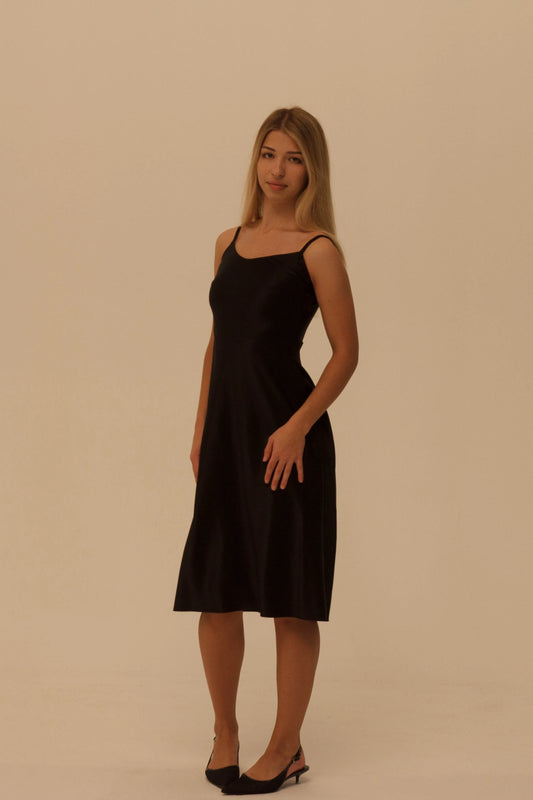
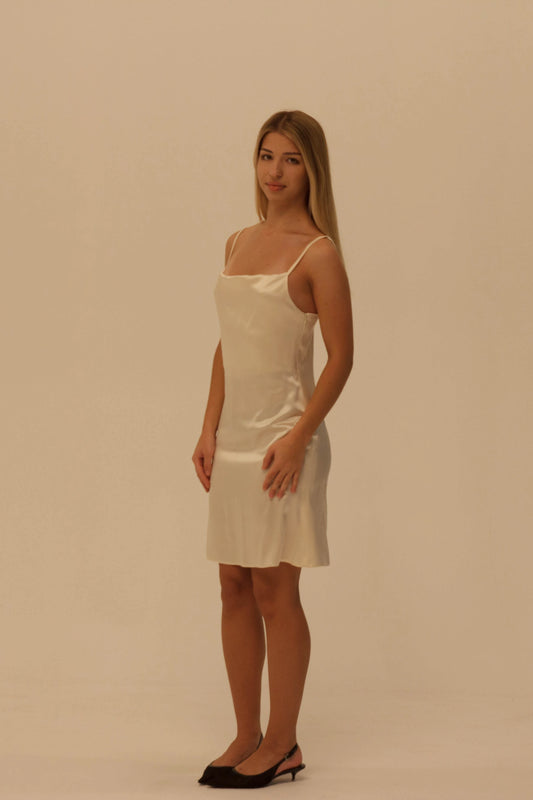
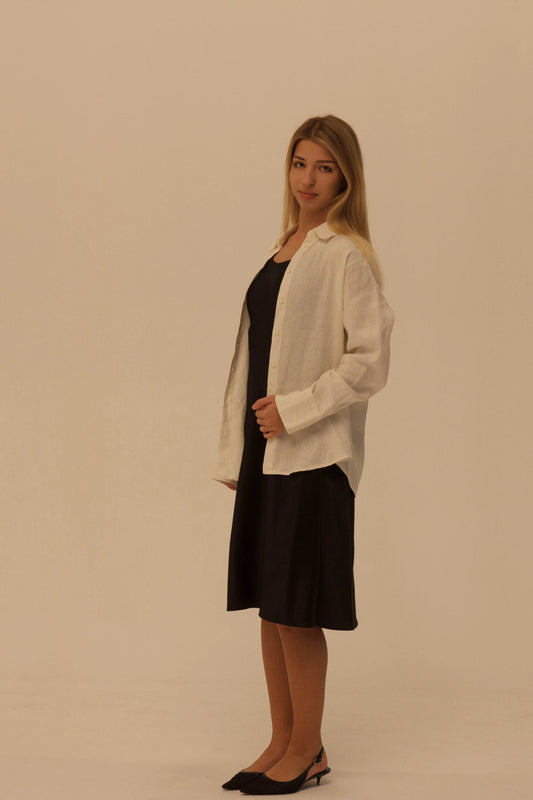
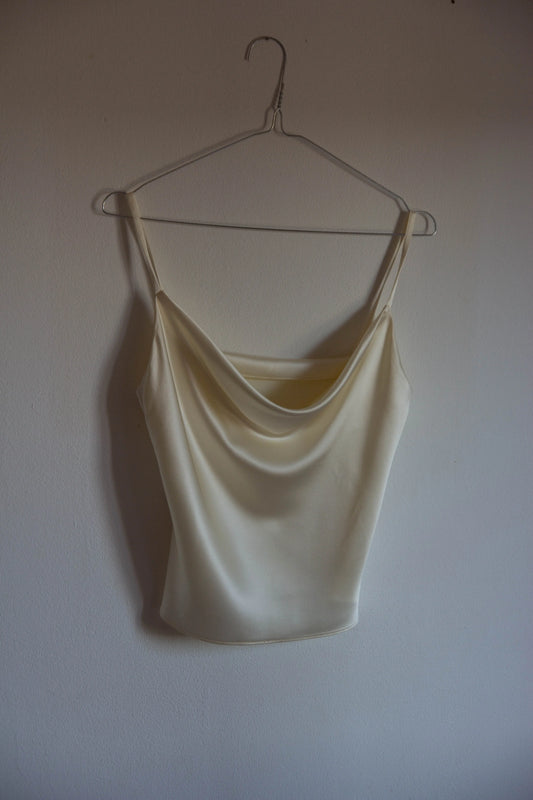
For a slip dress specifically, the case for silk is stronger than for almost any other garment category. The dress is worn against skin. The bias cut is what produces the drape, and bias-cut silk at proper weight behaves differently from any synthetic alternative. The simplicity of the design means the fabric is the entire garment. There is nothing else doing the work.
At 19mm and above, mulberry silk is a material that justifies the price through longevity and performance. Below that weight or in any synthetic alternative, the slip dress is a different product at a different price point, regardless of what the label says.
Bradic slip dresses are made from 25mm mulberry silk, bias cut, French seamed, and made to your measurements in Croatia. bradic.eu