Silk vs Satin Slip Dress: Which Fabric Actually Lasts (and Feels Better)
You're shopping for a slip dress. Two nearly identical dresses hang side by side. One label says "silk," the other says "satin." The silk dress costs €400. The satin dress costs €80.
Both look smooth and elegant on the hanger. Both feel slippery to touch. So what's the actual difference? And which one should you buy?
The answer isn't as simple as "silk is always better." But understanding what you're actually comparing changes everything about how you shop for slip dresses.
What Silk and Satin Actually Are (The Confusion Explained)
Here's where most people get confused: silk and satin aren't comparable terms. They're describing different things entirely.
Silk is a fiber. It's the natural protein fiber produced by silkworms. When you see "100% silk," that's telling you what the material is made from, the actual substance of the thread.
Satin is a weave. It's a specific way of interlacing threads that creates a smooth, lustrous front surface and a dull back. Satin can be made from silk, polyester, rayon, or any fiber that can be woven.
This is why the comparison is confusing. You're not comparing like to like. You're comparing a material to a construction method.
What people usually mean when they say "satin":
When most people say "satin," they're referring to polyester satin or rayon satin. This is fabric woven in a satin weave using synthetic fibers rather than natural silk. It mimics the look of silk satin but uses cheaper materials.
What silk satin actually is:
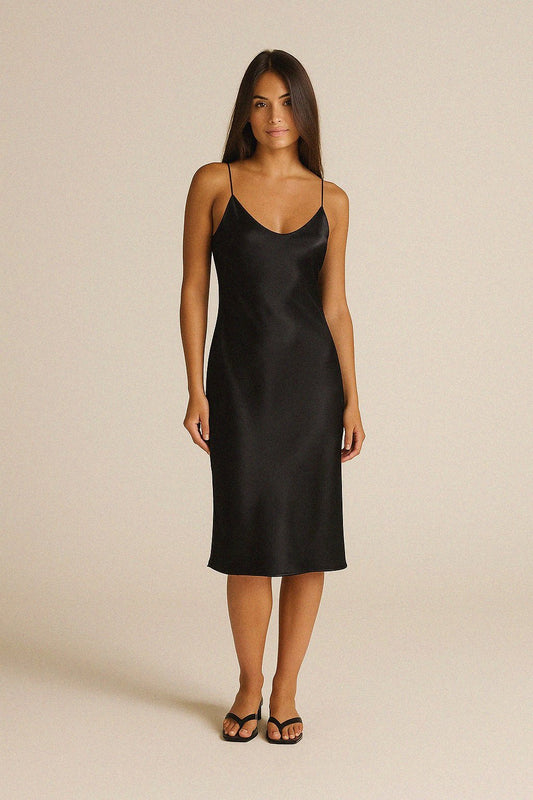
Silk can be woven in a satin weave, creating silk satin. This is what high-quality slip dresses use. The fabric is both silk (the fiber) and satin (the weave), creating a material that's lustrous, drapey, and made from natural protein fibers.
The real comparison:
When choosing a slip dress, you're usually comparing:
- Silk satin (natural fiber, satin weave)
- Polyester satin (synthetic fiber, satin weave)
Both have the characteristic smooth, shiny surface of satin weave. But the fiber content creates dramatically different performance, feel, and longevity.
Sometimes you'll also see silk charmeuse, which is technically a type of satin weave optimized for lightweight, drapey fabric. For practical purposes, silk charmeuse and silk satin behave similarly in slip dresses.
Understanding this distinction is essential. You're not choosing between silk and satin. You're choosing between natural fiber silk and synthetic fiber that's woven to look similar.
How They Feel Against Skin (The Luxury Factor)
The difference in hand feel is immediate and unmistakable once you know what to notice.
Silk satin on skin:
Cool to the touch initially, then warms to body temperature. This thermoregulating property is unique to silk. The fabric feels alive, responsive to your body heat.
Smooth but not slippery in an artificial way. Silk has subtle texture, a very fine grain you can feel if you pay attention. It glides against skin without the plasticky slide of synthetics.
Soft without being limp. Quality silk has body and substance even when lightweight. It drapes fluidly but doesn't feel insubstantial or cheap.
Breathable against skin. You don't feel clammy or sweaty even when wearing silk close to the body for extended periods. The fiber wicks moisture naturally.
Polyester satin on skin:
Often feels slightly warmer or neutral temperature, not cool like silk. Doesn't regulate temperature the same way.
Very smooth, almost too smooth. The slipperiness feels artificial, more like plastic than natural fiber. No subtle texture, just uniform smoothness.
Can feel clammy after wearing for a while, especially in warm weather or if you're active. Polyester doesn't breathe the way silk does, trapping moisture against skin.
Sometimes has a slightly sticky quality when it warms up from body heat. Not quite tacky, but not the clean, dry feel of silk.
The difference compounds over time:
Silk continues to feel pleasant after hours of wear. It adapts to your body temperature and doesn't trap moisture or odor the way synthetics do.
Polyester satin can start to feel less comfortable as you wear it. The lack of breathability becomes more apparent. If you perspire at all, the fabric doesn't manage it well.
For slip dresses specifically, this matters enormously. You're wearing the fabric directly against skin with minimal layers. The feel difference isn't theoretical. It's what you experience every moment you're wearing the dress.
Durability: Which Actually Lasts Longer
This is where expectations often don't match reality.
Silk's durability (better than most people think):
Natural silk fiber is remarkably strong. A silk fiber is stronger than a steel filament of the same diameter. This strength translates to garments that withstand years of wear.
Silk resists tearing and abrasion well. Quality silk slip dresses can be worn regularly for years without developing thin spots or holes in high-friction areas.
Silk can handle washing and dry cleaning repeatedly when done correctly. It doesn't degrade quickly from normal care. Vintage silk garments from decades ago remain wearable, proving the fiber's longevity. Learn more in about care in our full guide — How to Care for Silk
The main vulnerability is snagging. Silk can catch on rough surfaces or jewelry and pull. But this doesn't mean the dress is ruined, just that you need to be somewhat careful.
Where silk can fail: Very lightweight silk (under 16mm) is more delicate and can wear out faster. Cheap silk or poorly constructed garments won't last regardless of fiber. But quality silk, properly made, is genuinely durable.
Polyester satin's durability (mixed reality):
Polyester is chemically stable and doesn't break down easily from washing or wearing. In this narrow sense, it's durable.
However, polyester satin pills aggressively. After a few wears and washes, you'll see small fuzzballs forming on the surface, particularly in friction areas. This makes the dress look worn and cheap even if it's technically intact.
Polyester also develops a shiny, plasticky appearance with wear that becomes progressively more obvious. The fabric doesn't age gracefully. It looks progressively cheaper.
Polyester retains odors in ways silk doesn't. After wearing a few times, polyester garments can develop persistent smells that don't fully wash out. This is due to bacteria thriving in the trapped moisture.
The practical lifespan:
A quality silk slip dress worn and cared for properly can last ten to twenty years, looking elegant throughout its life and actually becoming softer and more comfortable with age.
A polyester satin slip dress might physically hold together for years, but it will look worn, pilled, and cheap after a season or two of regular wear. The material doesn't break down entirely, but its appearance degrades enough that you'll want to replace it.
For investment pieces you want to wear repeatedly over years, silk wins decisively on actual functional lifespan.
Breathability and Temperature Regulation
This factor is underrated but becomes critical when you're actually wearing the dress.
How silk manages temperature:
Silk is a natural protein fiber with a complex structure that traps air. This creates insulation in cool temperatures while allowing moisture vapor to pass through in warm temperatures.
The result is a fabric that keeps you comfortable across a surprising temperature range. A silk slip dress works in air-conditioned restaurants and warm summer evenings without feeling too cold or too hot.
Silk absorbs moisture from your skin and releases it to the air gradually. This wicking property means you don't feel sweaty or clammy even when wearing silk in moderately warm conditions.
Because silk breathes, it doesn't trap odors. Bacteria require sustained moisture to thrive. Silk's ability to move moisture away from skin prevents bacterial growth, meaning silk garments stay fresh longer between washes.
How polyester behaves:
Polyester is hydrophobic, meaning it repels water. When you perspire, the moisture sits on the fabric's surface or against your skin rather than being absorbed and wicked away.
This creates a clammy, uncomfortable feeling in anything warmer than climate-controlled indoor temperatures. The dress might look fine but feel unpleasant to wear.
Polyester provides some insulation but doesn't regulate temperature dynamically. It's either too warm or too cool, rarely just right across varying conditions.
The trapped moisture creates ideal conditions for odor-causing bacteria. Polyester athletic wear is notorious for retaining odor. The same issue affects polyester slip dresses, though perhaps less obviously.
Practical implications:
If you're wearing a slip dress to an event, traveling in it, or wearing it for extended periods, breathability matters immensely. Silk allows you to be comfortable throughout varying temperatures and activity levels.
Polyester works fine for brief wear in controlled temperatures. A photo shoot, a quick dinner, anything short-term in air conditioning. But extended wear or exposure to temperature variation reveals its limitations.
Price vs Long-Term Value
The cost difference is significant, so the value question matters.
Polyester satin slip dress economics:
Initial cost: €50 to €150 typically Lifespan before looking worn: 1 to 2 years with regular wear Cost per wear: If worn 20 times before it looks too worn to keep wearing, approximately €2.50 to €7.50 per wear
Silk slip dress economics:
Initial cost: €300 to €800 for quality construction Lifespan: 10+ years with proper care Cost per wear: If worn 100+ times over its life, approximately €3 to €8 per wear initially, decreasing every year you continue wearing it
The math shifts over time:
Year one, the polyester dress seems like better value. Lower upfront cost, similar cost per wear if you calculate it simply.
Year three, the calculation changes. The polyester dress probably needs replacing. You've now spent €100 to €300 on two dresses. The silk dress is still excellent, looking better actually as it's softened with wear. Your cost per wear continues dropping.
Year ten, there's no comparison. You've bought and discarded four to six polyester dresses at a total cost potentially exceeding a single quality silk dress. The silk dress, if it's quality silk properly cared for, is still wearable and may have become a favorite piece.
Hidden costs of polyester:
Frequent replacement means more shopping trips, more decision fatigue, more environmental impact from production and disposal.
Dry cleaning polyester is pointless and expensive. Hand washing works but doesn't fully refresh the fabric the way it does with silk.
The psychological cost of wearing something that looks progressively cheaper can't be quantified but affects how you feel in the garment.
Hidden value of silk:
A silk dress you genuinely love and wear frequently becomes part of your wardrobe identity. This intangible value compounds over years.
Silk can be repaired if damaged. A small snag or seam issue can be fixed, extending the garment's life further. Polyester isn't worth repairing due to low replacement cost.
Quality silk dresses can be resold or passed down. They retain value in ways polyester doesn't. This creates residual value polyester lacks entirely.
Which Should You Actually Choose
The right choice depends on your specific situation and priorities.
Choose silk when:
You want a slip dress you'll wear repeatedly over years. The investment makes sense when the dress becomes a wardrobe staple rather than a one-time-wear piece.
You're wearing the dress for extended periods or in varying temperatures. The breathability and comfort matter when you're actually living in the garment, not just wearing it briefly.
You value how fabric feels against skin. If tactile experience matters to you, the difference between silk and polyester is significant enough to justify the cost.
You prefer buying fewer, better things. If your approach to wardrobes favors quality over quantity, silk aligns with this philosophy.
You want something that ages well. Silk develops character over time. Polyester develops wear.
Choose polyester satin when:
You need something for very occasional wear. If you'll wear the dress once or twice a year, the durability advantage of silk doesn't matter much.
Budget is the primary constraint. If €400 for a dress is genuinely not feasible, a well-made polyester option is better than no dress or going into debt for silk.
You want to try the slip dress style before investing. A less expensive dress lets you determine if the style works for you before committing to silk.
The dress is for a specific event and won't be repeated. Costume or theme event where you need the look but not the longevity.
You prefer variety over longevity. If you like changing your wardrobe frequently and don't want to wear the same pieces for years, polyester's shorter lifespan isn't a disadvantage.
The honest assessment:
For most people buying a slip dress they intend to wear regularly, silk is the better long-term investment despite higher upfront cost. The wear experience is superior, the lifespan is longer, and the cost per wear becomes favorable over time.
Polyester has its place for very specific use cases, but it's not a substitute for silk in any meaningful way beyond superficial appearance.
What to Look for in a Silk Slip Dress
If you're choosing silk, certain factors determine whether you're getting quality worth the price.
Momme weight matters enormously. This measures silk density. For slip dresses, 19mm to 22mm is ideal. Lighter than 16mm is too delicate for regular wear and will develop issues quickly. Heavier than 22mm is too substantial for the fluid drape slip dresses require.
Check the weave type. Charmeuse or silk satin are correct for slip dresses. Crepe de chine is too matte. Habotai is too light. Organza is too stiff. The weave should be specified, not just "silk."
Construction quality matters as much as fabric. Look for French seams or properly finished seams. Bias-cut construction if the dress is designed for it. Adjustable straps that are reinforced at attachment points. The construction must support years of wear.
Verify it's actually mulberry silk. The highest quality silk comes from mulberry-fed silkworms. Other silk types exist but don't have the same properties. Reputable brands specify mulberry silk.
Price should reflect quality. A genuine silk slip dress in proper weight with quality construction costs €300 minimum, typically €400 to €800. Below this, something is compromised: likely the silk weight is too light, or the silk grade is low, or the construction is rushed.
The Verdict: Material Matters More Than Marketing
The silk versus satin debate is really about whether you value genuine material quality or the appearance of luxury.
Polyester satin looks similar to silk at first glance. But it doesn't feel the same, doesn't breathe, doesn't age well, and doesn't last in any meaningful sense. It mimics silk aesthetically while lacking silk's actual properties.
Silk performs. It regulates temperature, feels luxurious, lasts for years, and becomes more comfortable with wear. The cost is higher, but the value proposition shifts dramatically over time.
For a slip dress you'll wear once and forget, the material barely matters. For a slip dress that becomes part of your regular wardrobe, worn dozens or hundreds of times over years, silk is worth every additional euro you invest.
The choice isn't really about budget constraints. It's about whether you're buying a temporary garment or an investment piece. Decide which you want, then choose the material accordingly.
But if you're buying silk, make sure it's actually quality silk properly constructed. Not all silk dresses are worth their price. The material is necessary but not sufficient. Construction, weight, and design must all support the material quality.
When everything aligns, a silk slip dress becomes one of those rare garments that justifies its existence in your wardrobe year after year. That's the real difference between silk and satin. Not just how it looks, but how it lives.