Why Made-to-Measure Is the New Standard
Miron BradicReady-to-wear is designed to fit as many people as possible. Made-to-measure is designed to fit one. The difference is not subtle.
Standard sizing is a statistical tool. A brand measures a large population, calculates the most common proportions, and produces garments that fit those averages well and everyone else to varying degrees. This is commercially necessary and practically useful for most everyday clothing.
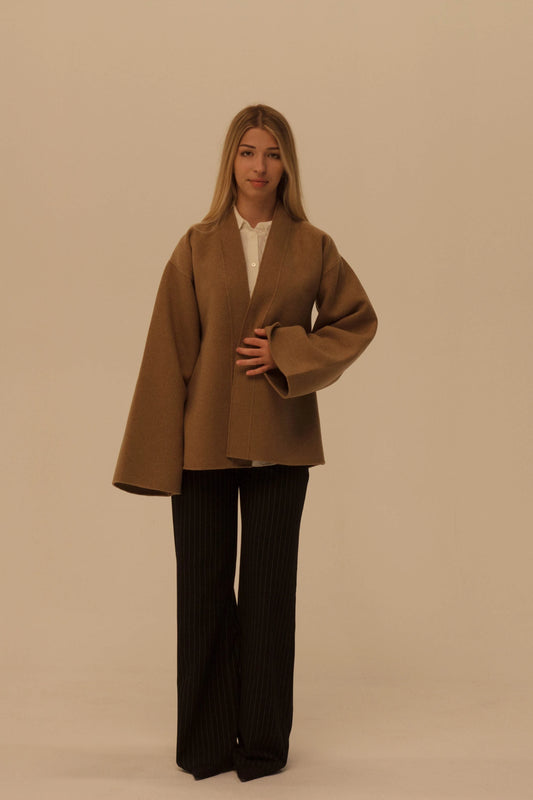
For a t-shirt or a linen shirt, approximate fit is acceptable. For a tailored wool skirt, a bias-cut silk dress, or a structured coat, approximate fit is the difference between a garment that looks made for you and one that looks like it fits reasonably well. These are not the same thing, and the gap between them is visible.
This is the case for made-to-measure. Not that bespoke construction is inherently superior as a philosophy, but that certain garments require individual measurements to perform correctly. The design only works when the fit is right.
What Ready-to-Wear Cannot Solve
The limitations of standard sizing are structural, not the result of brands cutting corners. The problem is that human bodies do not vary along a single axis.
A size 38 dress is designed around a specific waist measurement, hip measurement, torso length, and shoulder width. Each of these measurements is a population average. The proportion between waist and hip, between shoulder width and torso length, between bust and ribcage: all of these vary independently across people. A woman who fits a size 38 waist may have a hip measurement that belongs to a size 40, a torso length that belongs to a size 36, and shoulder width that belongs to a size 38. Standard sizing addresses none of these variations. It picks one number and applies it.
The consequence is that ready-to-wear fits a relatively small percentage of buyers precisely. Everyone else makes adjustments: wearing a size up or down, having pieces altered, accepting that the shoulders sit slightly off or the waist falls at the wrong point. These compromises are so normalized that most people no longer notice them. They are simply how clothes fit.
For structured tailoring, this matters less than you might expect because internal construction compensates. A well-made blazer has canvas interfacing, padding, and seam structure that hold the shape regardless of minor fit deviations. The construction does some of the work that the fit does not.
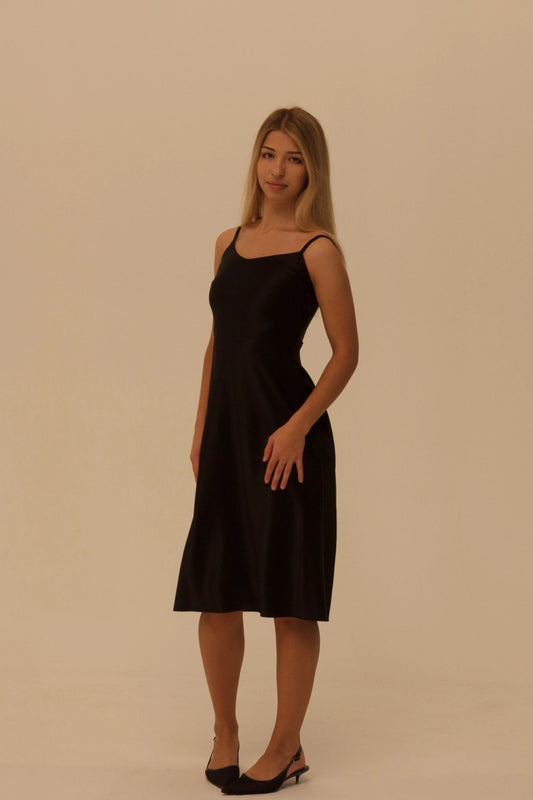
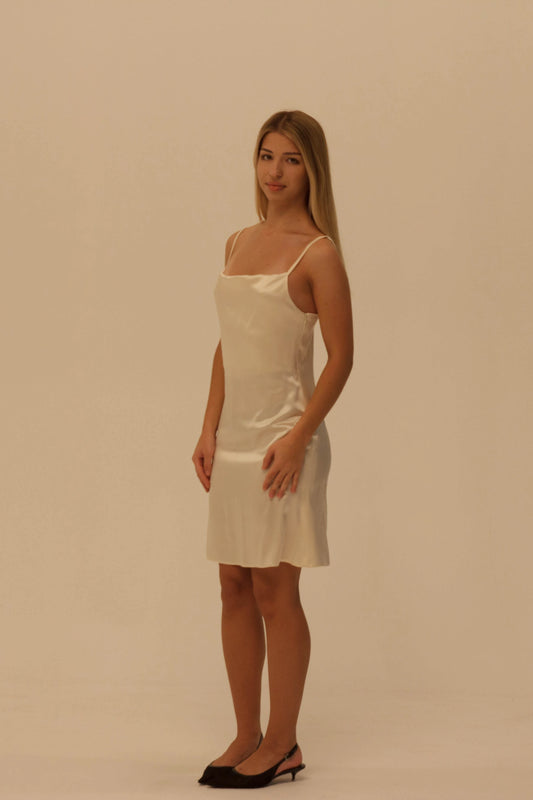
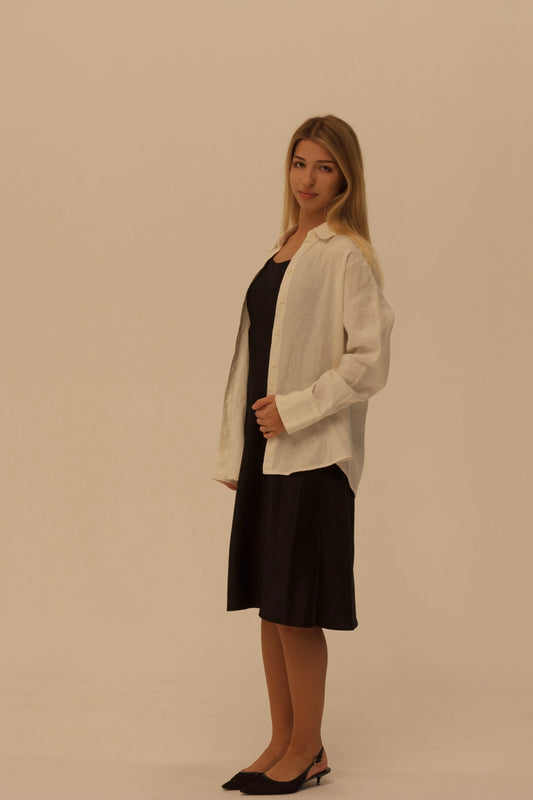
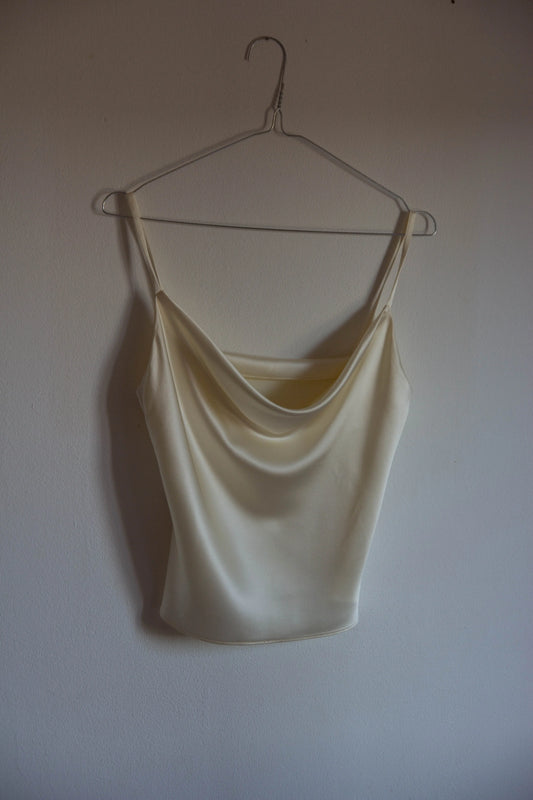
For unstructured pieces, there is no such compensation. A bias-cut silk slip dress has no internal structure. The bias cut creates its characteristic drape by allowing the fabric to follow the body's curves through the elasticity of the diagonal grain. If the proportions do not match the body, the fabric cannot follow correctly. It either pulls, hangs unevenly, or sits at the wrong height. There is nowhere to hide a fit problem in a garment built entirely around drape and flow. Good silk is the foundation of this, but silk alone cannot correct a pattern that was not made for the wearer.
What Made-to-Measure Actually Involves
Made-to-measure is not simply a size adjustment applied to a standard pattern. Done correctly, it involves creating a pattern specific to the individual's measurements from the beginning.
For a tailored skirt, the four measurements that determine fit are waist circumference, hip circumference, waist-to-hip distance, and desired length. Standard sizing provides a fixed waist-to-hip distance because it has to. The population average for this measurement is approximately 20 to 21 centimeters. A significant proportion of women have a shorter or longer distance, which means the hip shaping in a standard pattern sits at the wrong point on their body regardless of how accurate the circumference measurements are. The skirt pulls at the hip, sits oddly at the waist, or does both. Taking the waist-to-hip distance as an individual measurement and adjusting the pattern accordingly eliminates this problem entirely.
For a slip dress, the relevant measurements extend to shoulder width, torso length, and strap placement. The bias cut amplifies the importance of each because bias-cut fabric responds more dramatically to proportional variation than straight-cut fabric. A strap positioned for a standard shoulder width sits incorrectly on a narrower or wider shoulder. A torso length calibrated to a population average produces a waist seam at the wrong point on a shorter or longer torso. These deviations are visible in the finished dress in a way that similar deviations in a straight-cut dress would not be.
The pattern development stage in made-to-measure addresses these variables before fabric is cut. The result is that the construction process begins from accurate proportions rather than from standard ones adjusted after the fact.
The Fitting Process
In made-to-measure construction, measurement is the starting point, not the entire process. A fitting at an intermediate stage, when the garment is largely constructed but not fully finished, allows assessment of how the pattern's proportions translate into the actual garment on the actual body.
Bodies are three-dimensional and the relationship between measurements and the finished garment involves variables that measurements alone do not fully capture. Posture affects how a garment sits. The distribution of mass across the hip affects how a skirt hangs. The precise position of the shoulder joint affects where a strap should be attached. These variables are visible at a fitting and cannot be fully captured on paper.
The adjustments made at this stage are typically small in measurement terms. A side seam taken in by two millimeters. The waistband adjusted by a few millimeters in circumference. Strap length corrected by a centimeter. Small deviations in measurement produce noticeable deviations in how the garment looks and moves. Correcting them before final finishing is the difference between a dress that fits and a dress that fits well.
For a silk slip dress, the fitting stage is particularly important because the final hem length is set here, marked while the dress is worn with the shoes it will be worn with. A hem marked from a measurement alone cannot account for how the bias cut shifts on the specific body, or how the dress sits when worn with a particular heel height. The fitting eliminates these variables.
Made-to-Measure and Ready-to-Wear: What Each Is Good For
Made-to-measure is not the correct solution for every garment. The additional lead time, the requirement to provide measurements, and the higher cost are not justified for everyday basics where approximate fit is genuinely acceptable.
It is the correct solution for garments where fit is the primary variable that determines whether the piece works. Bias-cut silk dresses are in this category. Tailored wool skirts are in this category. Structured pieces where the silhouette depends on precise proportions are in this category.
Ready-to-wear from a brand with genuinely refined sizing, multiple width fittings, or unusual size range coverage can approach made-to-measure results for buyers whose proportions happen to align with the brand's patterns. For everyone else, alterations after purchase are the practical middle path: buy the well-made ready-to-wear piece and have it adjusted by a skilled tailor. This is significantly cheaper than made-to-measure and produces better results than wearing standard sizing unadjusted. The limitation is that not every alteration is possible depending on seam allowances and construction method.
Made-to-measure eliminates the alteration step entirely by starting from correct proportions. The cost and lead time premium reflects this: the pattern work and fitting involved in made-to-measure production take time that ready-to-wear production does not require.
The Sustainable Case for Correct Fit
There is a practical sustainability argument for made-to-measure that is distinct from the ethical arguments usually made for slow fashion.
A garment that fits correctly gets worn. A garment that fits approximately gets worn sometimes, with reservations, and eventually gets worn less as the reservations accumulate. The wardrobe full of pieces that almost work is one of the primary drivers of overconsumption: people keep buying because nothing they own is quite right, and nothing is quite right because none of it was made for them.
Made-to-measure eliminates this cycle for the specific pieces it is applied to. The dress that was made for your measurements gets worn consistently because it works consistently. It does not get replaced because a better-fitting version appeared. It is already the better-fitting version.
This is not an argument that everyone should commission everything. It is an observation that for investment pieces, garments you intend to wear for years, the cost of made-to-measure is partly recovered in the certainty that the piece will actually be worn rather than sitting in the wardrobe waiting to fit better.
What to Look for in a Made-to-Measure Service
The term made-to-measure is applied inconsistently. Some services offering it are producing individual patterns from individual measurements. Others are adjusting standard patterns using a limited set of measurements. These are different things and produce different results.
Indicators of genuine made-to-measure production: the brand takes multiple measurements relevant to the specific garment rather than a general set, the lead time is weeks rather than days (individual pattern work and fitting take time), a fitting stage is included or offered for local clients, and the brand can explain what measurements affect which aspects of the pattern.
Indicators that the service is closer to standard sizing with adjustments: a small number of measurements are taken, the garment is produced in the same lead time as ready-to-wear, no fitting is offered, and the sizing options are described in standard size terms with minor adjustments.
The difference matters because only genuine made-to-measure addresses the variables that standard sizing cannot. Adjusted standard patterns correct some deviations but not the proportional ones that require individual pattern work.
The Practical Question
Made-to-measure is worth the cost and lead time for garments where fit is the difference between the piece working and not working. For a bias-cut silk dress or a tailored wool skirt, this is the case. The design of both garments depends on proportional accuracy that standard sizing cannot guarantee and that the garments' construction cannot compensate for.
For most other categories of clothing, ready-to-wear in the right size, altered if necessary, is the practical and economical choice. Made-to-measure is not a philosophy to apply universally. It is a solution to a specific problem: garments that require individual proportions to perform as designed.
The problem is real and common. The solution, for the garments where it matters, is straightforward. Your measurements, a correct pattern, a fitting, and the garment that results is one you will wear without reservation for as long as the fabric holds. That is what made-to-measure actually delivers.