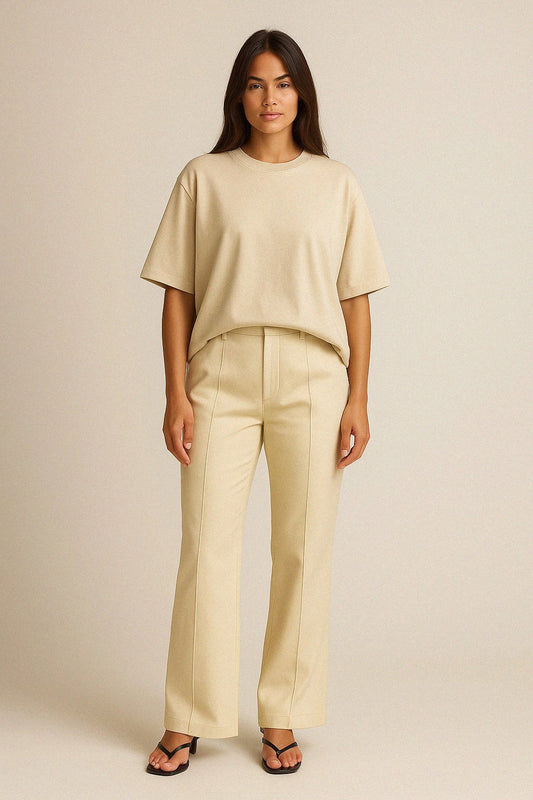
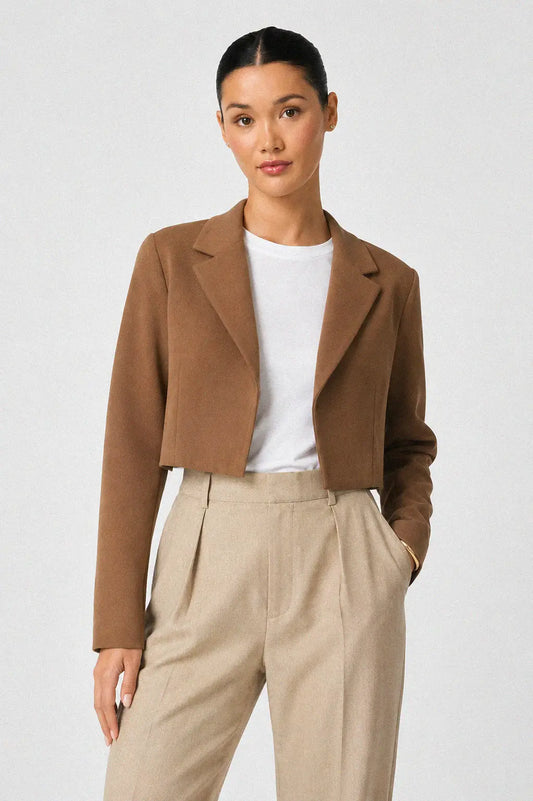
Quiet Luxury in 2026: What It Actually Means (& Why It Has Nothing to Do With Money)
Quiet luxury isn't new. The concept has existed as long as wealth has.
But in 2026, it's finally understood.
Not as a trend. Not as an aesthetic. But as a fundamental shift in how people with discernment approach clothing. They're done announcing wealth through logos. They're done with seasonal fashion that feels disposable. They're searching for something that feels permanent in an increasingly temporary world.
This isn't about having money. Plenty of wealthy people dress loudly. This is about understanding that real luxury whispers, and only those who know how to listen can hear it.
What Quiet Luxury Actually Means in 2026
The definition has clarified over the past few years. We now know what quiet luxury is by what it isn't.
It isn't:
Expensive designer brands worn obviously. A Gucci belt with prominent logo. A Louis Vuitton bag covered in monogram. These signal wealth, but not quiet luxury. They're loud by design.
Minimalism for aesthetics alone. Wearing all black and calling it quiet luxury. Having a sparse wardrobe of cheap basics in neutral colors. This is minimalism, which is different.
Price tags that announce themselves. Wearing something specifically because it costs €5,000 and wanting others to know it. Quiet luxury doesn't care if others know the price.
It is:
Material quality you can feel but might not see. Mulberry silk that drapes like water. Virgin wool that holds structure for decades. Cashmere so fine it barely weighs anything. The fabric is the luxury, not the label.
Proportion and fit that look effortless but require expertise. Garments that sit exactly right on the body. Sleeves that end precisely where they should. Trousers that break at exactly the correct point on the shoe. This requires either perfect ready-to-wear fit or made-to-measure construction.
Craftsmanship invisible to casual observation but essential to performance. French seams you never see but that prevent fraying for years. Pressing after every construction step that creates crisp lines. Hand-finished buttonholes that will never unravel. The work that makes garments last decades.
The essential principle: Quiet luxury is recognized by those who understand it, not announced to those who don't.
Someone who knows fabric can identify quality silk by how it moves. Someone who understands tailoring can spot proper construction in the shoulder line and lapel roll. Someone who values craft can see the difference between machine-made and hand-finished.
Everyone else just sees a nice coat, a simple dress, classic trousers. And that's precisely the point. Quiet luxury doesn't perform for an audience. It exists for the wearer and for those with the knowledge to appreciate it.
Why Quiet Luxury Is Growing (The Real Reasons)
The shift toward quiet luxury isn't about trends changing. It's a response to saturation and disillusionment.
Fast fashion fatigue is real. After years of constant consumption, buying pieces that fall apart in months, chasing micro-trends that last weeks, people are exhausted. The hamster wheel of buy-wear-discard-repeat has lost its appeal. Quiet luxury offers an exit: fewer purchases, higher quality, longer lifespan.
Logo fatigue is equally real. Luxury logos became so ubiquitous they lost meaning. When everyone carries a designer bag, having one no longer signals anything except participation in mass luxury. The truly discerning moved away from obvious branding years ago. By 2026, this shift is mainstream among those who can afford choice.
Economic uncertainty changes priorities. Even affluent consumers are reconsidering what constitutes value. A €800 coat you wear for fifteen years becomes rational. A €200 coat you replace every two years becomes wasteful. Quiet luxury's emphasis on longevity aligns with more thoughtful consumption even among those with means.
Desire for authenticity over performance. Social media created pressure to perform wealth and status constantly. By 2026, many people are tired of performing. They want clothing that feels genuine, that reflects actual taste rather than curated image. Quiet luxury allows you to dress well without dressing for the camera.
Sustainability awareness without greenwashing. Fast fashion's environmental impact is now common knowledge. Quiet luxury's emphasis on buying less, buying better, and keeping garments for years is inherently more sustainable. This appeals to those who want to reduce impact without falling for marketing greenwashing.
The growth isn't about quiet luxury becoming trendy. It's about fundamental values shifting toward quality, longevity, and authenticity. Quiet luxury embodies these values in tangible form.
The Five Rules of Quiet Luxury (Core Principles)
If quiet luxury had a rulebook, these would be the non-negotiable principles.
Rule 1: Fabric First
Material quality determines everything else. You can't create quiet luxury from mediocre fabric, regardless of design or construction.
The fabrics that matter:
Silk, specifically mulberry silk in proper weight. 19mm to 22mm charmeuse for dresses and blouses. The kind that drapes fluidly and has that internal glow, not surface shine.
Wool, particularly virgin wool. 300gsm to 400gsm for coats and tailored pieces. Wool that holds structure while remaining soft, that lasts decades without pilling or losing shape.
Cashmere, but only if it's quality. Grade A, long-fiber cashmere that doesn't pill after three wears. Two-ply minimum for garments that will hold shape. Cashmere that feels substantial, not wispy.
Linen, ideally European. High-thread-count linen that's been properly woven and finished. The kind that wrinkles beautifully and becomes softer with every wash while remaining strong.
Feel over appearance. Quiet luxury fabrics might not photograph dramatically. They don't have the immediate visual pop of metallics or prints. But touch them, wear them, live in them, and the difference is undeniable. The fabric feels right against skin, drapes correctly, regulates temperature, and improves with age.
This is where most "affordable quiet luxury" fails. Brands use thin, low-quality materials in neutral colors and call it quiet luxury. But cheap wool pills. Thin silk doesn't drape. Low-grade cashmere looks tired after one season. The fabric betrays the pretense.
Real quiet luxury starts with material investment. The fabric must be genuinely good, not just adequate.
Rule 2: Fit Over Trends
Perfect proportion trumps trending silhouettes every time.
Trends change seasonally. Wide-leg trousers one year, slim-cut the next. Oversized blazers, then fitted blazers. Quiet luxury ignores these oscillations and focuses on what actually flatters the wearer's specific proportions.
This means:
Garments cut to your actual measurements, not standard sizing approximations. Either perfect ready-to-wear fit or made-to-measure construction that accounts for your shoulder width, torso length, and proportions.
Clothes that sit exactly where they should. Waistlines at your natural waist. Sleeves ending at the wristbone. Trousers breaking correctly at the shoe. These details seem minor but determine whether a garment looks refined or sloppy.
Silhouettes that complement your body rather than fighting it. Not every trending shape works for every body. Quiet luxury wears what actually works, even if that means skipping current trends entirely.
The test: If the garment fits perfectly but the trend passes, quiet luxury keeps wearing it. If the trend is current but the fit is approximate, quiet luxury passes entirely.
This is why quiet luxury and fast fashion are incompatible. Fast fashion operates on trend cycles and standard sizing. Quiet luxury operates on timeless silhouettes and precise fit. The philosophies contradict each other.
Rule 3: Neutral, But Not Basic
Quiet luxury lives in neutral tones, but neutral doesn't mean boring.
The quiet luxury palette:
Black, but rich black. Black that doesn't fade to grey after a few washes. Black with depth, not flatness.
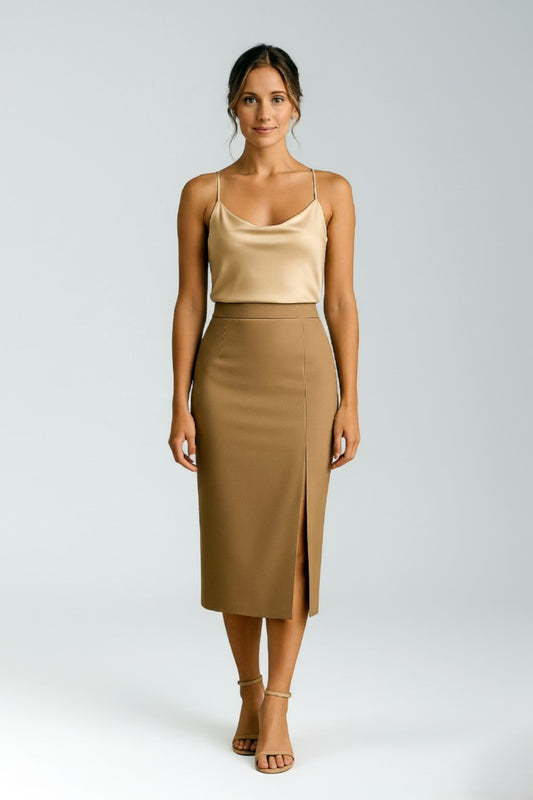
Camel, the color that defines quiet luxury more than any other. Warm, sophisticated, works with everything. Never bright tan, always deeper camel.
Ivory and cream, not stark white. Soft neutrals that don't scream for attention but provide elegant contrast.
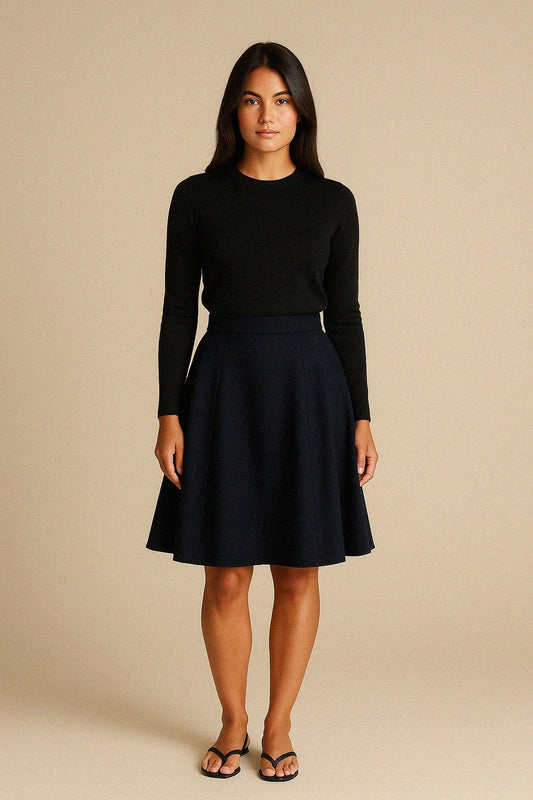
Navy, particularly deep navy that reads almost as neutral. More refined than black in many contexts.
Grey, in all its variations from charcoal to stone. Versatile, elegant, underrated.
Olive, the green that works as a neutral. Sophisticated, unexpected, still quiet.
Depth through texture, not pattern. Instead of visual interest through prints or colors, quiet luxury creates depth through material texture. The nap of cashmere. The weave of linen. The subtle sheen of silk. The fabric itself provides visual interest.
This isn't basic. Basics are cheap neutral pieces that look interchangeable. Quiet luxury neutrals have character through material quality and construction. The difference is immediate when you see them in person, even if they photograph similarly.
Rule 4: Fewer Pieces, Better Pieces
Quiet luxury rejects the idea that more clothing equals better wardrobe.
The principle: Own fewer garments, each significantly better quality, worn more frequently.
Ten exceptional pieces you wear constantly creates a more functional wardrobe than fifty adequate pieces you cycle through. The math is simple but the psychology is difficult. We're conditioned to think abundance equals success.
Quiet luxury inverts this. Having three perfect white shirts, all impeccably made, all fitting flawlessly, is better than having fifteen white shirts of varying quality and fit.
This requires:
Willingness to invest more per piece. €500 for a coat you'll wear for twenty years is better value than €100 for a coat you'll replace every two years, but the upfront cost is higher.
Patience to build a wardrobe over time. You can't assemble a quiet luxury wardrobe overnight. It accumulates as you find pieces that meet your standards and will serve you for years.
Confidence to repeat outfits. Quiet luxury means wearing the same coat, the same trousers, the same dress repeatedly. This requires being comfortable with repetition, which social media discourages.
Discipline to pass on pieces that are good but not great. If it doesn't fit perfectly, if the fabric isn't quite right, if you won't wear it constantly, quiet luxury passes even if it's objectively nice.
This is minimalism with maximum intention. Not owning little for its own sake, but owning exactly what you need, all of it excellent, nothing wasted.
Rule 5: Invisible Craftsmanship
The work you can't see matters more than the details you can.
Internal construction quality:
French seams that enclose raw edges, preventing fraying. You never see these seams, but they determine whether the garment lasts five years or twenty.
Proper interfacing in tailored pieces. Not heavy fused interfacing that bubbles, but canvas or hair canvas that gives structure while remaining flexible.
Hand-finished hems that are nearly invisible. Not wide machine hems that announce themselves, but delicate rolled hems or hand-stitched finishes.
Pressing after every construction step. The seams are pressed open as they're sewn, the fabric is shaped over curves, the final piece is pressed and steamed to perfection. This creates crisp lines and proper drape that sloppy pressing can't achieve.
These details are invisible in photographs. You can't see internal seam finishing in a product shot. You can't tell if something was pressed properly from looking at it on a hanger.
But you feel it when wearing. The garment sits right. It moves correctly. It doesn't pull or bunch. It maintains its shape. All because of work done during construction that will never be photographed or obviously visible.
This is where expertise matters. Recognizing quality construction requires knowledge. Knowing what French seams are, why canvas interfacing is better than fused, how proper pressing affects drape. Without this knowledge, you can't evaluate quiet luxury correctly.
The craft is quiet because it's embedded in the garment's structure, not announced on its surface.
What Most Brands Get Wrong About Quiet Luxury
The market is flooded with brands claiming to offer quiet luxury. Most miss the point entirely.
The most common mistake: equating minimalism with quality.
Minimalist aesthetic, cheap materials. All-neutral clothing line made from polyester and thin cotton. Simple designs with no embellishment, but also no substance. This is cost-cutting disguised as refined taste.
Quiet luxury's neutral palette and clean lines come from not needing decoration because the fabric and construction are excellent. Removing embellishment from mediocre materials doesn't create luxury. It creates boring, cheap clothing.
The second mistake: no attention to construction.
Brands offering "quiet luxury" at mid-market prices with machine overlocking, fused interfacing, and no hand finishing. The aesthetic might be right, but the craftsmanship is absent.
True quiet luxury requires labor-intensive construction methods that cost money. If the price is too low to support proper craftsmanship, the claims of quiet luxury are false regardless of how the garments look.
The third mistake: standard sizing presented as refined.
Quiet luxury requires excellent fit. Standard S/M/L sizing rarely provides this. Brands offering quiet luxury aesthetics in standard sizing are missing a fundamental element.
Made-to-measure or extremely refined ready-to-wear sizing is necessary. Without it, you get the look without the fit, which defeats the purpose.
The fourth mistake: trend-chasing with a neutral filter.
Following every trend but in beige. Wide-leg trousers because they're trending, but in camel so it looks like quiet luxury. Oversized blazers because they're current, but in black so it seems refined.
This is trend participation disguised as timelessness. Quiet luxury doesn't chase trends even in neutral colors. It ignores trends and focuses on what works across years.
The tell: If the brand's offerings change significantly season to season, it's not quiet luxury. Quiet luxury collections evolve slowly, refining rather than reinventing.
Quiet Luxury vs "Looking Rich"
These are opposite philosophies that get confused because both involve expensive clothing.
Looking rich focuses on external perception:
Wearing recognizable logos so others know you can afford luxury brands. Choosing items specifically because they're widely recognized as expensive. Dressing to signal wealth to observers.
The priority is being seen as wealthy. The clothing is performance, the audience is everyone you encounter. Success is measured by whether others recognize your status markers.
Quiet luxury focuses on internal experience:
Wearing exceptional materials because they feel good and last. Choosing items based on personal standards of quality and fit. Dressing to satisfy your own requirements for excellence.
The priority is owning quality regardless of whether others notice. The clothing is for you. Success is measured by how well the garment performs over years of wear.
The psychology differs fundamentally:
Looking rich seeks external validation. It requires recognition to have meaning. If no one notices, the purpose is defeated.
Quiet luxury provides internal satisfaction. Recognition is irrelevant. The garment works for you whether anyone else appreciates it or not.
This is why quiet luxury isn't about money. Wealthy people can and do dress loudly. Poor people can and do understand quality even if they can't afford it currently. Quiet luxury is a mindset about what you value in clothing, not a spending level.
You can save for one quiet luxury piece and wear it for twenty years. You can build a quiet luxury wardrobe slowly over decades. The timeline doesn't matter. The values do.
How to Start (Three Pieces That Matter)
If you want to move toward quiet luxury, start with three categories that form the foundation.
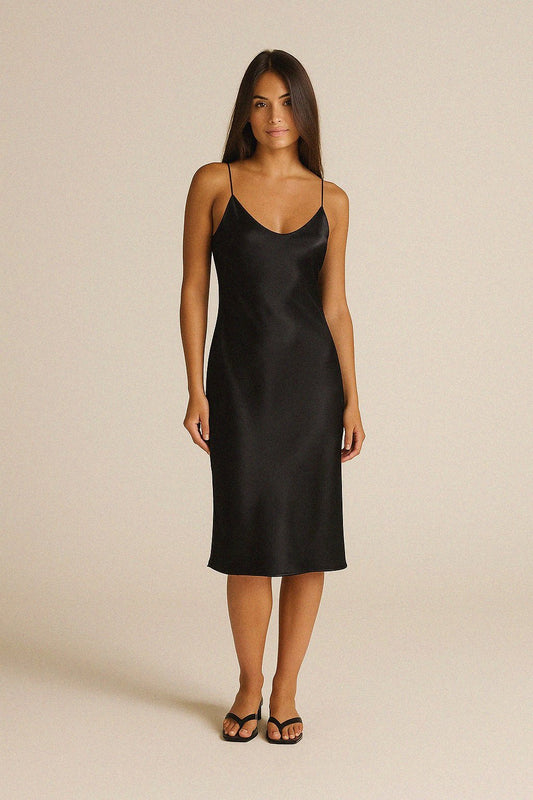
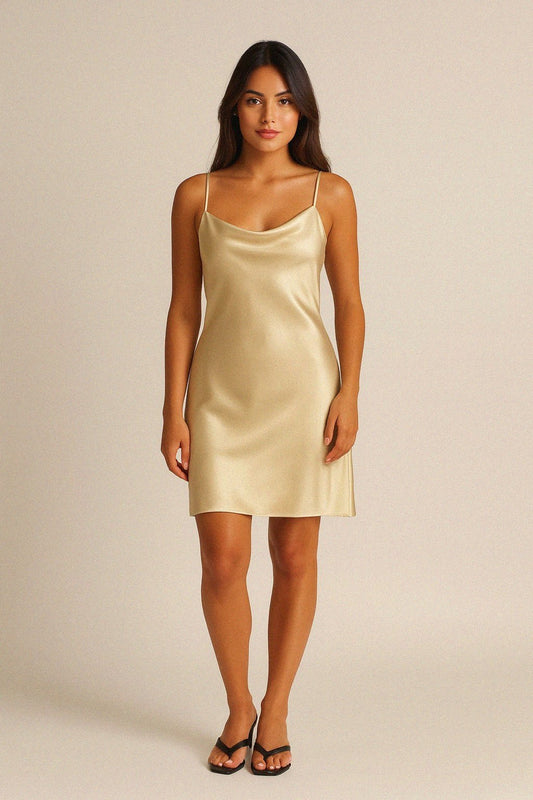
Piece 1: A silk slip dress
Why silk: It's the fabric where quality difference is most obvious. Good silk versus bad silk is immediately apparent in drape and feel.
What to look for: 19mm mulberry silk minimum. Bias-cut construction. French seams. Adjustable straps that are reinforced. Length that suits your height specifically.
Why it matters: A slip dress is worn close to skin, making fabric quality essential. It's simple enough that there's nowhere to hide construction flaws. If you're going to invest in one thing, let it be this.
Explore bias-cut silk slip dress
Budget: €300 to €600 for quality. Less than this and you're compromising on silk weight or construction.
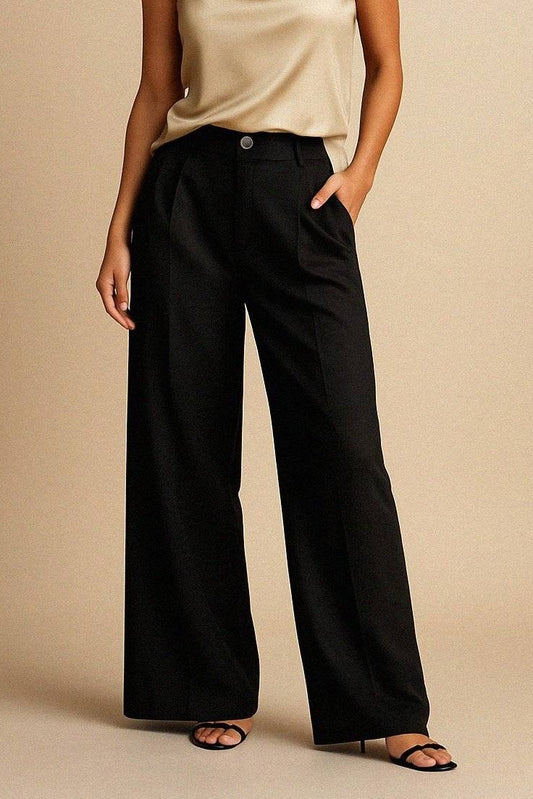
Piece 2: Tailored wool trousers
Why wool: Trousers take significant wear. Wool's durability and structure retention are essential for garments worn frequently.
What to look for: Virgin wool, 280gsm to 350gsm. Proper waist and hem finishing. Clean internal seams. The waistline should sit at your natural waist, the break should be correct for your leg length.
Why it matters: Perfect-fit trousers are wardrobe anchors. You wear them constantly, they work across contexts, they last for years. They're worth getting exactly right.
Explore tailored wool trousers
Budget: €250 to €500. Made-to-measure is worth considering for trousers because standard sizing rarely fits perfectly.
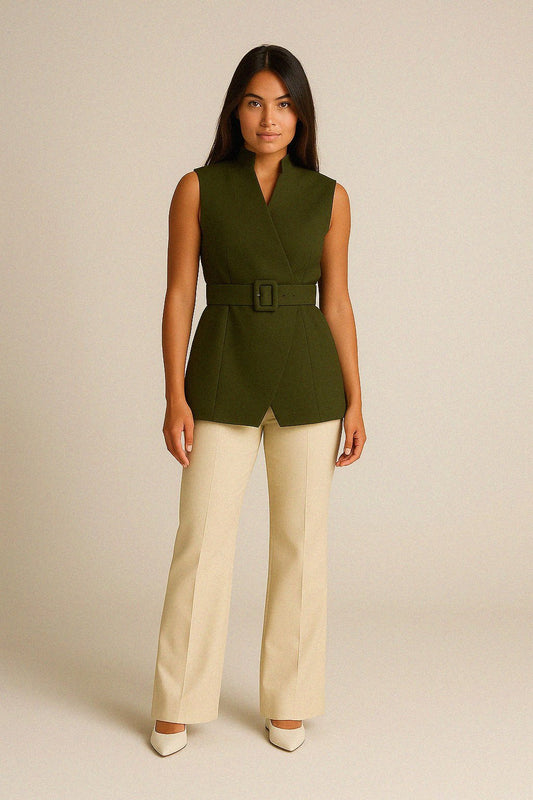
Piece 3: A wool or cashmere vest
Why wool or cashmere: Vests are visible, worn frequently, and kept for years. The fabric investment is justified by longevity and performance.
What to look for: 300gsm wool minimum for structure. Proper lining, ideally silk. Clean tailoring with shoulders that fit your frame exactly. Length appropriate for your height.
Why it matters: A quality vest transforms your entire appearance. It's the piece others see most, the investment that lasts longest, the garment that makes everything underneath look more refined.
Explore olive wool vest with silk lining
Budget: €400 to €900 for exceptional quality that lasts decades.
These three pieces create the foundation. From here, you add slowly: another silk piece, quality knitwear, a blazer, a second pair of trousers. Building takes years, but each piece serves you throughout that time.
What Quiet Luxury Actually Communicates
When done correctly, quiet luxury communicates specific things without saying a word.
Confidence. Not needing logos or obvious luxury signals suggests security in yourself. You're not seeking validation through clothing.
Knowledge. Understanding fabric quality, construction, and fit demonstrates sophistication. You know what quality looks like and how to evaluate it.
Restraint. Choosing quiet over loud shows discipline and refined taste. Not everything that announces itself deserves attention.
Priorities. Investing in fewer, better pieces shows you value longevity and quality over quantity and novelty.
Self-respect. Wearing clothing made from good materials that fit well demonstrates you value your own comfort and experience over others' perception.
These messages are received by those who understand them and invisible to those who don't. That's the entire point.
Quiet luxury isn't for everyone. It requires patience, knowledge, and willingness to invest in quality that isn't always immediately apparent. It's incompatible with fast fashion, trend-chasing, and wearing clothing primarily for social media.
But for those who value craft, material quality, and timelessness, quiet luxury offers a coherent philosophy for building a wardrobe that serves you for decades.
In 2026, that philosophy finally makes sense to more people. Not because it's trending, but because the alternative (constant consumption of mediocre things) has proven unsatisfying.
Quiet luxury persists because it's based on genuine quality. And quality, unlike trends, doesn't expire.